

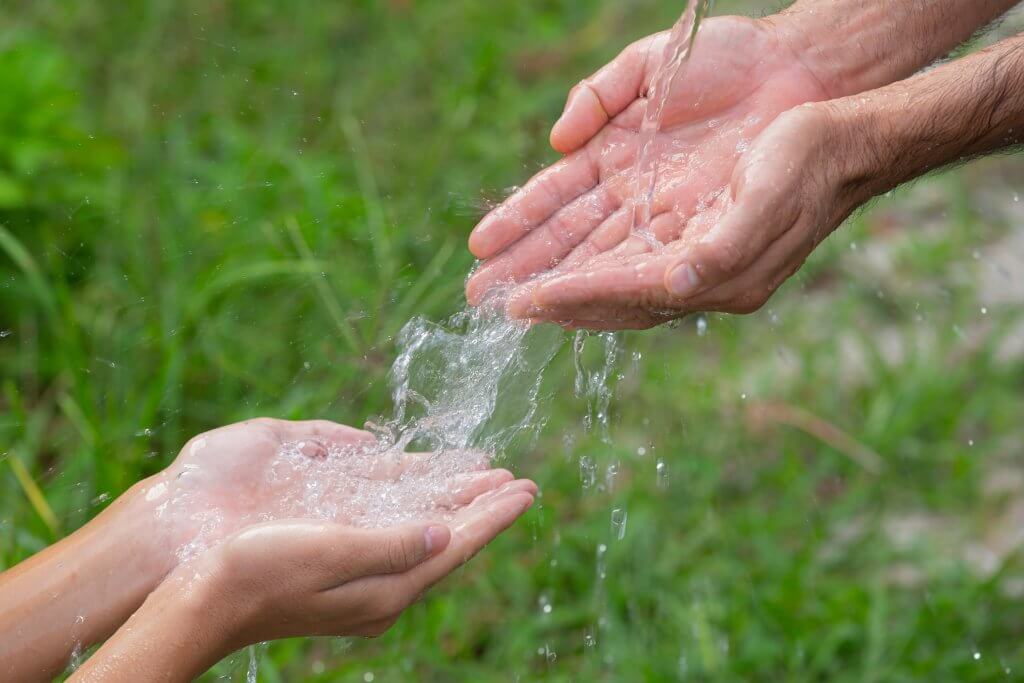
Of all natural resources, water is, without a doubt, the most important resource for sustaining life on planet Earth. Its chemical formula is H₂O.2Composed of two hydrogen atoms and one oxygen atom, water is responsible for maintaining and balancing biodiversity and also for regulating the planet's climate. It participates in various chemical and biological reactions that occur in living beings and is related not only to the emergence of life on Earth, but also to its evolution. Approximately 70% of the planet's surface is covered by water. However, most of the water on the planet is saltwater. There is only 2.7% of freshwater, and of that percentage, only 0.1% corresponds to freshwater available for use.
Water can be considered both a renewable and a non-renewable natural resource; it all depends on the problem at hand and the source from which the water will be extracted. Water stored in a deep aquifer is generally a non-renewable resource, and its economic exploitation will be limited by the size of the aquifer. On the other hand, water stored in a reservoir supplied by the flow of a river is a renewable resource, and its economic exploitation will ultimately be limited by the flow of water precipitated as rain over the watershed.
Water pollution from various types of debris (e.g., empty packaging, garbage, sediments), organic compounds (e.g., pesticide molecules), toxic chemical elements (e.g., heavy metals) or nutrients (e.g., nitrate and phosphorus), and unwanted microorganisms (e.g., bacteria and viruses harmful to health) has been frequently detected in different regions of the world (Ongley, 2000), raising a red flag for all nations. In line with this global concern, the UN produced and published the Universal Declaration of Water Rights on March 2, 1992, a day that became known as World Water Day. This document details various important attitudes, information, and precepts to motivate a responsible view of water resources worldwide on the part of governments and other citizens. The intention is to promote the idea of conscious consumption of water. Water and sustainable development These are related and fundamental issues so that future generations can count on having access to this resource.
The role of agriculture in water conservation.
Although not the only agent responsible for the loss of water quality, agriculture directly or indirectly contributes to the degradation of water sources, as cited by Resende (2002). According to this author, the widespread, and often inadequate, application of pesticides, fertilizers, and waste derived from intensive animal farming are considered the main activities related to the loss of quality in rural waters. When nutrient leaching is very high, it can cause eutrophication, which basically corresponds to an increase in nutrients (especially phosphorus (P) and nitrogen (N)), causing excessive multiplication of organisms such as algae and bacteria, reducing the amount of oxygen and causing the death of various aquatic species.
The exposure of soil to the direct impact of raindrops leads to surface sealing of the soil, reducing water infiltration and increasing runoff volume, as cited by Caixeta et al. (2009). Consequently, according to Bertol et al. (2004), soil and water losses tend to decrease the soil's productive capacity due to the removal of nutrients and organic carbon adsorbed and solubilized in runoff water, in addition to causing siltation of rivers. Given this scenario and the importance of water for life, science has been dedicated to researching solutions and alternatives that contribute to water conservation and reuse, using agriculture as an ally.
Aiming to reduce any and all losses, agriculture relies on a compilation of conservationist production practices, whose main function is to maintain the physical, chemical, and biological qualities of the soil, also contributing to the preservation of water in rural areas. A well-known conservationist practice is the preservation of soil mulch – no-till farming system (NTFS), which aims to reduce water erosion, protecting the soil from the direct impact of raindrops on the surface and preventing soil disintegration, thus reducing nutrient leaching and the consequent pollution of rivers, water sources, and groundwater.
Reforestation and the conservation of riparian forests are also conservation practices, as cited by Soldera (2020), since they greatly assist in water availability. Furthermore, according to this author, it is necessary to train producers, as daily knowledge of cultivation combined with good planting and management techniques can result in innovations for the sector and contribute to water conservation in the field. The adoption of measures such as water reuse for activities that do not require potability is also an ally in the preservation of this resource, as stated by Santos and Ummus (2015), and agricultural activities once again emerge as protagonists in this story, with the treatment of animal waste for the production of gas, energy, and subsequent water reuse. In addition, reducing losses in transport and distribution can also contribute to efficiency in water use in agricultural activity (Faggion et al., 2009).
According to Resende (2002), from an agronomic point of view, the assessment of contamination risk and the monitoring of water quality over time are the main tools that will lead to the rationalization of plant and animal production activities and, according to the criteria of technical, practical, economic and environmental viability, adopting, when necessary, appropriate control measures in each case.
ILSA Brazil: Fertilizers allied to the preservation of water quality.
The appropriate choice of fertilizer to be used also has an impact on the preservation of water, as well as soil, since water erosion is affected by the soil preparation method employed in the cultivation process (Johnson et al., 1979; Alberts & Moldenhauer, 1981; Schwarz, 1997; Bertol et al., 2007; cited by Gilles et al., 2009) and by its levels in the soil, the latter being highly dependent on the application of fertilizers and soil amendments (Eltz et al., 1989; Bertol, 2005; cited by Gilles et al., 2009).
Nutrient losses, such as N and P – the main contributors to eutrophication, as previously mentioned – are present in a large part of conventional fertilization sources, mainly intensified by inputs that release these minerals immediately. Since the plant does not have the capacity to absorb all the elements that become available in high concentrations at the time of fertilizer application, they remain free in the soil solution. The nutrients are then transported to deeper soil layers through infiltrating water. And leaching can be further intensified depending on the soil texture, the type of nutrient, and its physical and chemical conditions, such as... cation exchange capacity (CEC)), as Veloso (2021) explains.
In this sense, the use of slow-release fertilizers represents an excellent alternative to conventional fertilization in terms of reducing water contamination by nitrate, for example. In general, the main advantages of slow-release fertilizers compared to others are that they have the potential to increase the efficiency of nitrogen fertilization, reduce N losses in the soil-plant-atmosphere system, resulting in less environmental impact (Shaviv, 2000; Trenkel, 2010; cited by Freitas, 2020), and improve N availability, adjusting to the plants' demand for it.
ILSA Brasil offers a wide range of fertilizers with gradual nutrient release. Therefore, they have a low environmental impact, from the fertilizer production process to soil and/or foliar application. Our organic fertilizers protect the soil from nitrate contamination because the gradual release of nitrogen – mediated by soil microbiology – ensures that this element is fully utilized by plants throughout their productive cycle. This prevents leaching into groundwater, in line with two of the UN's 17 Sustainable Development Goals: 6. Clean water and sanitation; and 14. Life below water. Furthermore, ILSA fertilizers are highly homogeneous, allowing for high fertilization efficiency and promoting the expression of the crop's maximum genetic potential, generating greater productivity and, consequently, greater profitability.
ILSA Brazil: Transforming the way we preserve and feed the planet – that is our purpose.
Bibliographic references
ALBERTS, EE; MOLDANHAUER, WC Nitrogen and phosphorus transported by eroded soil aggregates. Soil Sci. Soc. Am. J., n. 45, p. 391-396, 1981.
BERTOL, I.; LEITE, D.; RITTER, SR. Water erosion in a Haplic Nitosol subjected to different management systems under simulated rainfall I – Soil and water losses. Brazilian Journal of Soil Science, Campinas, v. 28, p. 1033-1044, 2004.
BERTOL, OJ. Contamination of surface runoff and percolated water by the effect of mineral and organic fertilization in a no-till system. Curitiba, Federal University of Paraná, 2005. 208p. (Doctoral Thesis)
BERTOL, I.; GONZÁLEZ, AP & VÁZQUEZ, EV. Surface roughness of soil under different doses of corn residue subjected to simulated rainfall. Pesq. Agropec. Bras., 42:103-110, 2007.
CAIXETA, RP; ALCÂNTARA, FA; MADEIRA, NR; ABDALLA, RP. Losses of water, soil, nutrients and organic matter in an area cultivated with onions under different soil management systems. Research and Development Bulletin, Embrapa Hortaliças, no. 51, 2009. 20 p.
ELTZ, FLF; PEIXOTO, RTG & JASTER, F. Effect of tillage systems on the physical and chemical properties of a Halic Brown Latosol. R. Bras. Ci. Solo, 13-02:259-267, 1989.
FAGGION, F.; OLIVEIRA, CAS; CHRISTOFIDIS, D. Efficient use of water: a contribution to the sustainable development of agriculture. Applied Research & Agrotechnology v. 2, n. 1, p. 187-190, 2009.
FREITAS, T. Controlled-release fertilizers and their blends with urea treated with a urease inhibitor for coffee plants. UFLA, Lavras, 2020. 126 p. (Doctoral Thesis)
GILLES, L.; COGO, NP; BISSANI, CA; BAGATINI, T.; PORTELA, JC. Water, soil, organic matter and nutrient losses due to water erosion in maize cultivation in native field areas, influenced by soil preparation methods and fertilization types. Rev. Bras. Ciênc. Solo – Seção VI (Manejo e conservação do solo e da água), v. 33, n. 5, p. 1427-1440, 2009.
JOHNSON, CB; MANNERING, JV & MOLDENHAUER, WC Influence of surface roughness and clod size and stability on soil and water losses. Soil Sci. Soc. Am. J., 43:772-777, 1979.
ONGLEY, ED Control of water pollution from agriculture. Electronic document (FAO irrigation and drainage paper, 55). 2000
RESENDE, AV. Agriculture and water quality: Water contamination by nitrate. Documents, Embrapa Cerrados, Planaltina, no. 57, 2002. 29 p.
SANTOS, D.; UMMUS, EM. More efficient ways of using water in agriculture. Fronteira Agrícola, Embrapa Pesca e Aquicultura, Palmas, n. 9, p. 1-3, 2015.
SCHWARZ, RA. Water erosion losses in different slope classes, tillage systems and soil fertility levels in the Missões Region – RS. Porto Alegre, Federal University of Rio Grande do Sul, 1997. 131p. (Master's Thesis)
SHAVIV, A. Advances in controlled-release fertilizers. Advances in agronomy, San Diego, v. 71, no. 1, p. 1-49, 2000.
SOLDERA, B. How can agriculture be more efficient in its use of water? Sustainable Water Institute Blog, 2020.
TRENKEL, M. Slow- and controlled-release and stabilized fertilizers: an option for enhancing nutrient efficiency in agriculture. 2nd ed. Paris: International Fertilizer Industry Association, 2010. 163 p.
VELOSO, C. Why choose fertilizers with a residual effect of nutrients? Blog Verde, 2021.
Authors
- Agricultural Eng. Msc. Aline Tramontini dos Santos
- Agricultural Eng. Msc. Carolina Custodio Pinto
- Agricultural Eng. Msc. Thiago Stella de Freitas