

According to CONAB, soybean production for the 2020/21 crop is estimated at 135.41 million tons, representing an increase of 8.51 million tons compared to the previous crop, which was 124.85 million hectares (8th survey, May 2021). According to this agency, this increase in production is driven by high international prices, strong export demand, and increased domestic demand. This makes Brazil the world's largest producer of this crop. commodity, surpassing the US.
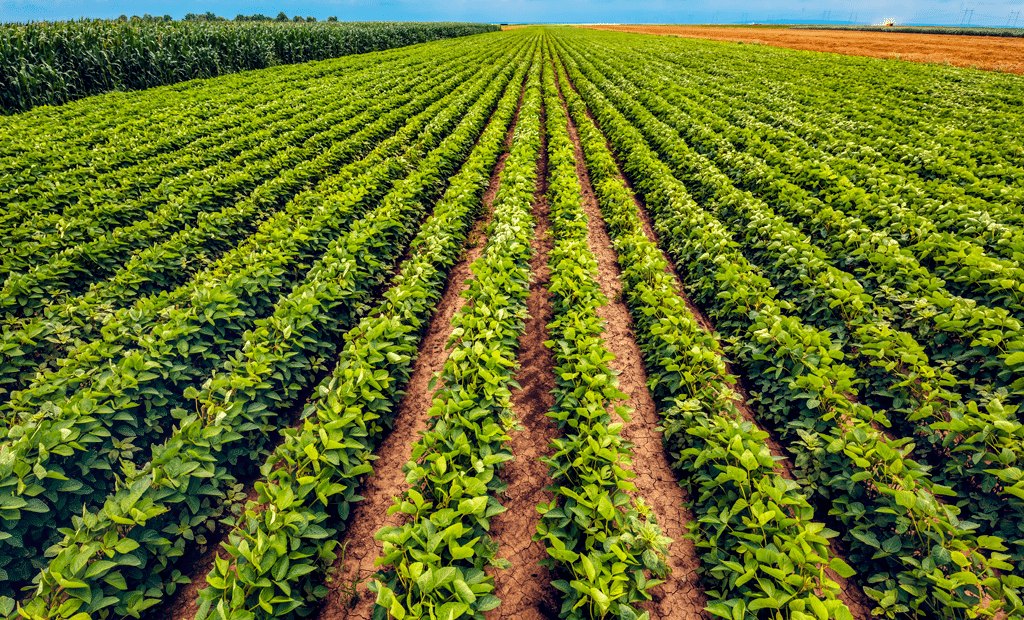
Soybean cultivation in Brazil is done sustainably, using resources aimed at reducing environmental impact. greenhouse gas emissions and with a low environmental impact, such as no-till planting system, biological nitrogen fixation ...and also integrated pest management. These factors may explain Brazil's leading position in world production, even without depleting forest areas and considering scenarios where there is an increase in grain demand in the coming years.
After successive crops, it is natural for the soil's macro and micronutrient stocks to become depleted, requiring supplementation through... fertilizing. According to Malavolta (1989), fertilization is a practice that consists of adding to the soil the nutrients that it can no longer supply to plants, filling the gap that exists between the plant's requirements and the soil's reserves. Therefore, several factors must be considered when choosing the ideal fertilizer for the crop. The crop's requirements, the environmental impact generated by the fertilizer, the form of absorption, and its potential to increase productivity are some of them. With this in mind, ILSA Brasil, in partnership with the Agroconect Institute of Agronomic Research, conducted an experiment to evaluate the use of organomineral fertilizer. Gradual Mix 06 15 10 in the increase in soybean productivity.
Description of the experiment
The trial was conducted in an experimental area of the Agroconect Research Institute Ltda, during the 2020/2021 growing season, located in the municipality of Erechim – RS, with soil classified as a humic Aluminoferric Red Latosol, Erechim mapping unit (EMBRAPA, 2013). The cultivar used was DM 57i52 IPRO, with 13 seeds per linear meter, sowing carried out on December 4, 2020, and harvested on April 12, 2021. The treatments are described in Table 1. Each treatment had four replications, and the experimental unit (plot) consisted of 5 rows with a distance of 0.45 cm and 5 m in length, totaling 12.5 m² per experimental unit, applied in the sowing furrow. The treatments were applied in the sowing furrow using the precision metering device of the seeder used. Potassium chloride was applied by broadcasting; the concentration used took into account the need to adjust potassium according to the formulations used. The experimental design used was in strips. During the experiment, the average temperature was 21 °C, the total precipitation reached 818.90 mm, and the average relative humidity was around 77 %.
Table 1. Treatment, formulation, doses and timing of fertilizer application in soybeans.
| Treatment | NPK | Dose (kg.ha-1) | Application period |
| ILSA Gradual Mix | 06 15 10 | 340 | Groove |
| 00 00 60 | 176 | V7 | |
| Witness | 02 23 23 | 300 | Groove |
| 00 00 60 | 100 | V7 |
The evaluations performed were based on productivity, in sacks per hectare (sc.ha).-1) and the mass of one thousand grains (g), with grain moisture adjusted to 13 %, based on the useful area of each experimental unit. The data obtained were subjected to Bartley's Test and the Shapiro-Wilk Test. Since there was no violation of the basic assumptions, analysis of variance was performed using the F-test. The means were compared using Fisher's exact test (LSD) at a probability of error of 5%.
Results
For the productivity variable, treatment with ILSA Gradual Mix 06 15 10 obtained a result of 83.5 sc/ha-1, in comparison to the witness, who obtained 70.6 sc.ha-1 (Table 2), generating an increase of 12.6 sc.ha-1. These data only confirm the excellence of ILSA Brasil products. The Gradual Mix organomineral fertilizer, from the line ILSA Vita, This fertilizer has a gradual release of nitrogen, which allows this nutrient to remain available for longer, enabling balanced crop development. According to Freitas (2017), this type of fertilizer delays the initial availability of nutrients, or increases their availability, aiming to synchronize the release with the plant's demand for the nutrient, reducing product losses to the environment through leaching and potentially increasing the efficiency of nitrogen fertilization.
Table 2. – Productivity (sc.ha)-1) and mass of one thousand grains (g) of soybeans.
| Treatment | Productivity (sc.ha)-1) | Mass of one thousand grains (g) |
| ILSA Gradual Mix | 83,5 | 155 |
| Witness | 70,6 | 153 |
Furthermore, the soil's cation exchange capacity (CEC) is also an important factor for the productivity of various crops, including soybeans. CEC directly influences soil stability, in pH, in the availability of nutrients and the effectiveness of fertilization. The Gradual Mix, in its formulation 06 15 10, it has a CTC of 80 %, which may also explain the increase in productivity. Allowing for the proper development of soil microorganisms It is an indispensable factor in a good fertilizer, as it also contributes to increased productivity, since these organisms are directly related to the cycling and subsequent availability of nutrients. The AZOGEL matrix, used in the formulation of ILSA Brasil's solid fertilizers, has high biological affinity, once again justifying its higher productivity value.
The other parameter evaluated was the mass of one thousand grains (Table 2), where the treatment with Gradual Mix fertilizer obtained 155 g and the control 153 g, a difference of 2 g. Although slight, considering yield per hectare, this increase provides us with a much broader view of the efficiency of Gradual Mix and its potential for use in soybeans.
Organomineral fertilizers They are the bet for the future. This is because, according to Teixeira et al. (2014), the application of these inputs reduces the high costs of fertilization and allows the simultaneous supply of mineral nutrients and organic matter. In addition to these benefits, Gradual Mix, like all ILSA Brasil fertilizers, has a low environmental impact, which promotes sustainable cultivation, regardless of the crop.
Bibliographic references
Monitoring of the Brazilian grain harvest – 8th survey. National Supply Company (CONAB). May/2021.
EMBRAPA – Brazilian Agricultural Research Corporation. System
Brazilian Soil Classification. 3. Brasília building, 2013. 353p.
FREITAS, T. Conventional, stabilized, slow or controlled release nitrogen fertilizers in coffee crops: efficiency and costs. UFLA, Lavras, 2017. 97 p. (Master's Dissertation)
MALAVOLTA, E. ABC of fertilization. 5th ed. Ceres, 1989, 294p.
TEIXEIRA, WG; SOUSA, RTX; KORNDÖRFER, GH response of sugarcane to phosphorus doses supplied by organomineral fertilizer. Biosci. J., Uberlândia, v. 30, n. 6, p. 1729-1736, 2014.
Authors
- Agricultural Eng. Msc. Aline Tramontini dos Santos
- Agricultural Eng. Msc. Carolina Custodio Pinto
- Agricultural Eng. Msc. Thiago Stella de Freitas