



Nitrogen (N) is the most required nutrient by plants (Figure 1). This is due to its important functions in crop growth, as it is the main constituent of amino acids, proteins, and cellular components such as chlorophyll (Taiz et al., 2017). Therefore, N deficiencies strongly impact the productivity of agricultural crops. Its cycle in nature is highly complex, depending on several factors, as it is the element with the greatest number of biochemical transformations in the soil-plant-atmosphere system (Taiz et al., 2017).
Figure 1. Nutrient absorption by maize (with a productivity of 12.2 t/ha) and irrigated rice (productivity of 11.8 t/ha). Adapted from: Pilecco et al., 2024 – Ecophysiology of maize aiming at high productivity.
In Brazil, the most widely used nitrogen source in agriculture is urea. However, volatilization losses in nitrogen fertilization with urea can reach 50% of the applied amount, depending on temperature and humidity conditions (Silva et al., 2016). In corn production in the United States, nitrogen fertilization, along with irrigation, were the biggest contributors to CO2 emissions.2 equivalent (Grassini; Cassman, 2012). The cost of mineral fertilizers, their low efficiency, and environmental pollution make the use of organic N sources an attractive option for agriculture (Silva et al., 2010). Table 1 shows the utilization of nitrogen (N), phosphorus (P), and potassium (K) in mineral and organomineral fertilizers.
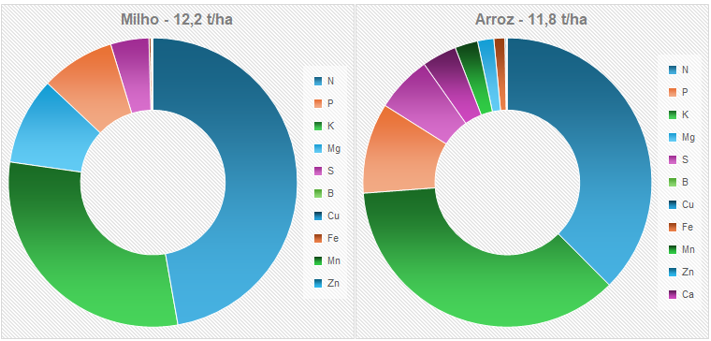
Table 1. Percentage of nitrogen (N), phosphorus (P) and potassium (K) utilization according to fertilizer type. Adapted from Polidoro (2013).
| Fertilizer | N | P | K |
| Mineral | 50% | 20-50% | 60% |
| Organomineral | 70% | 50% | 80% |
To better understand the dynamics of organic nitrogen in the soil, let's recall some important concepts of the biogeochemical nitrogen cycle (Figure 2). This is important because organic N is not immediately available to plants, as they absorb N in inorganic or mineral form. For this to happen, mineralization is necessary, which is basically transforming N in organic form into its mineral forms (ammonium = NH₄⁺ or nitrate = NO₃⁻). This occurs when organic compounds with a low Carbon/Nitrogen (C/N) ratio are degraded so that soil microorganisms can use these compounds as a source of energy and structure to grow and multiply. Organic NO is first converted into ammonia (NH₃), which reacts with water, forming ammonium (NH₄⁺). This can be absorbed by plants or converted into nitrite (NO₃⁻).2Ammonium (CH₃) is then converted into nitrate (NO₃⁻) in a process called nitrification. The predominant form depends on factors such as soil pH, aeration and moisture, temperature, amount of organic matter, and soil microbiota. Basically, acidic, compacted soils with low temperatures, low organic matter, and low microbial activity favor the presence of ammonium, while neutral to basic soils with good aeration, temperatures between 25 and 35°C, high organic matter, and high microbial activity favor the presence of nitrate.
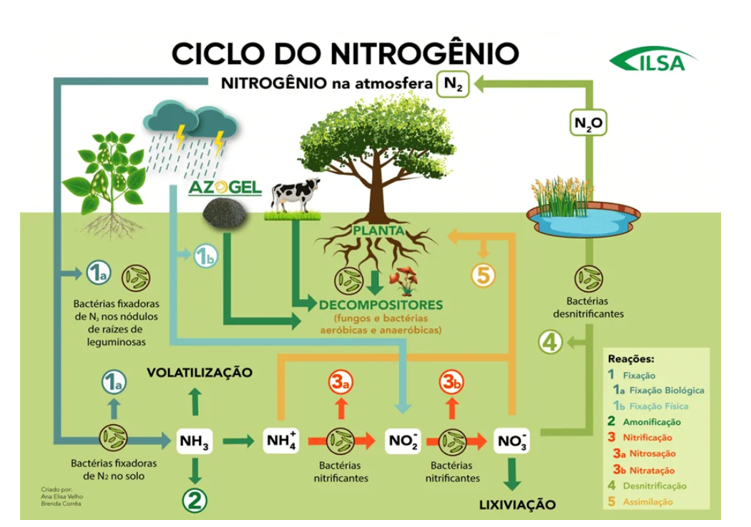
Figure 2. Biogeochemical cycle of nitrogen.
Let's think about it in a simplified way. To use C in their metabolism, microorganisms need N, which makes up proteins, enzymes, amino acids, and other compounds essential for their metabolism and growth. When the material has a low C/N ratio, it means that it has enough N for the C present in this compound. Thus, the "excess" N returns to the soil in inorganic forms, absorbable by plants. However, when the material has a high C/N ratio, that is, less N than is needed to metabolize that C, the microorganisms need more N than the compound offers; in this way, they immobilize, even if temporarily, the mineral N in the soil, using it in their own metabolism. AZOGEL, the organic matrix of ILSA's solid organic and organomineral products, is rich in nitrogen and carbon, presenting a low C/N ratio (<20), being 3.25.
In addition to soil organic matter, soil moisture, temperature, pH, and the soil microbiota itself influence this process. Therefore, the availability of nutrients from organic fertilizers is slower and more gradual. This is beneficial when considering the availability of nutrients throughout the crop cycle. Corn, for example, tends to absorb nitrogen, phosphorus, boron, copper, and zinc during practically its entire development cycle (Bender et al., 2013). Having adequate nitrogen availability close to the critical moment of the crop, which for grain crops is generally between flowering and grain filling, is fundamental for good productivity. This is because the number and weight of grains are defined at this time. On the other hand, at the beginning of crop development, which also tends to be a critical time for the number of plants per area component, this slower availability of nitrogen can be a challenge. That is why AZOSLOW, ILSA's fertilizer, is a combination of organic and mineral nitrogen, making nitrogen available immediately through the mineral fraction and gradually through the organic fraction, thus providing balanced and efficient fertilization throughout the crop development cycle.
In addition to this gradual release of nitrogen, AZOGEL is beneficial to overall soil health because, as we have seen, the composition of the soil microbiota influences nutrient availability. With its low C/N ratio, AZOGEL helps increase soil microorganism populations, promoting improved soil health without immobilizing nitrogen for crops.
Studies conducted with lettuce show that when the crop received organic fertilizers, higher concentrations of N, P, K, Ca, Mg, and S were found in the plants compared to those that received mineral nitrogen fertilization through urea (Lobo et al., 2023). This occurs due to the synergistic effect between nutrients. In the soil solution, nutrients are in the form of free ions, which can have positive or negative charges. These charges cause nutrients to interact differently in the soil solution, potentially facilitating (synergy) or hindering (antagonism) their absorption by plants (Table 2). In a simplified way, elements with opposite charges tend to establish synergism during the absorption process, while elements with similar charges can hinder the absorption of others. In practice, it is important to understand these interactions to manage plant nutrition in the most appropriate way, aiming to make the most of each applied nutrient, since this is one of the main production costs of crops.
Table 2. Absorbable form by plants of the main macro and micronutrients.
| Nutrient | Absorbed Form | Nutrient | Absorbed Form | |||
| Nitrogen (N) | NO₃⁻, NH₄⁺ | Manganese (Mn) | Mn²⁺, Mn⁴⁺ | |||
| Phosphorus (P) | HPO₄²⁻, H₂PO₄⁻ | Zinc (Zn) | Zn²⁺ | |||
| Potassium (K) | K⁺ | Copper (Cu) | Cu²⁺, Cu⁺ | |||
| Calcium (Ca) | Ca²⁺ | Boron (B) | BO₃³⁻, HBO₃²⁻, H₂BO₃⁻, B(OH)₄⁻ | |||
| Magnesium (Mg) | Mg²⁺ | Molybdenum (Mo) | MoO₄²⁻ | |||
| Sulfur (S) | SO₄²⁻ | Chlorine (Cl) | Cl⁻ | |||
| Iron (Fe) | Fe²⁺, Fe³⁺ | Sodium (Na) | Na⁺ | |||
Furthermore, the use of organic fertilizers, which provide better soil health and stimulate populations of beneficial microorganisms, is an important strategy in phosphorus management. This is because soil microorganisms play an essential role in the mineralization and solubilization of P (Pavinato et al., 2020). Unlike nitrogen-fixing bacteria, phosphate-solubilizing microorganisms apparently lack plant specificity, which hinders successful inoculation (Mendes, Junior, 2003). To minimize this problem, some strategies should be adopted, including the introduction of these bacteria into soils with high availability of organic substrates.
In summary, the dynamics of organic nitrogen in the soil are directly linked to the metabolism of microorganisms, as these will decompose organic matter to obtain carbon and nitrogen. The C/N ratio of organic matter influences the availability of N to plants. A low C/N ratio results in nitrogen mineralization, which can then be absorbed by plants. In addition to the C/N ratio of organic matter, factors such as temperature, humidity, pH, and microbial activity determine whether N will be available in the form of ammonium (NH₄⁺) or nitrate (NO₃⁻). The use of organic fertilizers, such as those composed of the AZOGEL organic matrix, can improve the efficiency of nitrogen nutrition, promoting a gradual release of the nutrient, synchronizing N release with crop demand, favoring soil health and absorption of other nutrients. Understanding these interactions is essential for efficient fertilization management, ensuring an adequate supply of N throughout the crop cycle and maximizing agricultural productivity.
Bibliographic references
Bender, RR et al. Nutrient uptake, partitioning, and remobilization in modern, transgenic insect-protected maize hybrids. Agronomy Journal, Madison, WI, vol. 105, no. 1, p. 161-170, 2013
Grassini, P., Cassman, K.G. High-yield maize with large net energy yield and small global warming intensity. PNAS, vol. 109, p. 1074–1079, 2012.
Lobo, TF et al. Evaluation of organic and mineral nitrogen in four successive cycles of lettuce cultivation. Revista Ciência Agrícola, v. 21, p. e11877, 2023.
Mendes, IC; Junior, FBR. Microorganisms and Phosphorus (P) Availability in Soils: a critical analysis. Embrapa, 2003. 24 p.
Pavinato, PS et al. Revealing soil legacy phosphorus to promote sustainable agriculture in Brazil. Scientific Reports, vol. 10, no. 1, 2020.
Pilecco, IB et al. Ecophysiology of maize aiming at high yields. Santa Maria, 2nd edition, 2024. 400p.
Polidoro, JC. Organomineral fertilizers: potential for coffee cultivation. Rio de Janeiro: Embrapa Solos, 2013. Slide presentation.
Silva, FAM et al. Response of lettuce to nitrogen fertilization with different organic compounds in two successive cycles. Acta Scientiarum Agronomy, 2010, 32, 131-137.
Silva, AGB et al. Urease Inhibitor NBPT on Ammonia Volatilization and Crop Productivity: A Meta‐Analysis. Agronomy Journal, vol. 109, no. 1, p. 1–13, 2016.
Taiz, L. et al. Plant Physiology and Development. 6th ed. Porto Alegre: Artmed, 2017. 888 p.
Authors:
Agr Eng. MSc. Isabela Bulegon Pilecco
Agricultural Eng. Msc. Thiago Stella de Freitas
Agricultural Engineer Tuíra Barcellos