Skip to content
  • Work with us
  • Whistleblower Channel
  • Intranet
  • Code of Ethics and Conduct
  • ENTERPRISE
  • TECHNOLOGIES
  • FIELD RESULTS
  • PRODUCTS
    • For Agriculture/Livestock
    • For Industry
  • SUSTAINABILITY
  • ENVIRONMENTAL MANAGEMENT
  • BLOG
  • WHERE TO BUY
  • CONTACT
  • ENTERPRISE
  • TECHNOLOGIES
  • FIELD RESULTS
  • PRODUCTS
    • For Agriculture/Livestock
    • For Industry
  • SUSTAINABILITY
  • ENVIRONMENTAL MANAGEMENT
  • BLOG
  • WHERE TO BUY
  • CONTACT
Instagram Facebook Linkedin Youtube
(51) 98183 9341
(51) 3500-3043
  • ENTERPRISE
  • TECHNOLOGIES
  • FIELD RESULTS
  • PRODUCTS
    • For Agriculture/Livestock
    • For Industry
  • SUSTAINABILITY
  • ENVIRONMENTAL MANAGEMENT
  • BLOG
  • WHERE TO BUY
  • CONTACT
  • ENTERPRISE
  • TECHNOLOGIES
  • FIELD RESULTS
  • PRODUCTS
    • For Agriculture/Livestock
    • For Industry
  • SUSTAINABILITY
  • ENVIRONMENTAL MANAGEMENT
  • BLOG
  • WHERE TO BUY
  • CONTACT

Good practices in fertilizer storage

Boas práticas no armazenamento de fertilizantes

          When we talk about agricultural production, we are talking about a production chain and organization that must be carried out, seeking to minimize factors that could cause economic losses. 

          According to EMPRAPA, fertilizer costs for annual crops, for example, range from 20 to 40%. Therefore, storage practices must be used to ensure the longevity and quality of stored fertilizers, in addition to ensuring safety in the places where they are stored. 

          ILSA has some tips for the best fertilizer storage.

  • How to store bags?

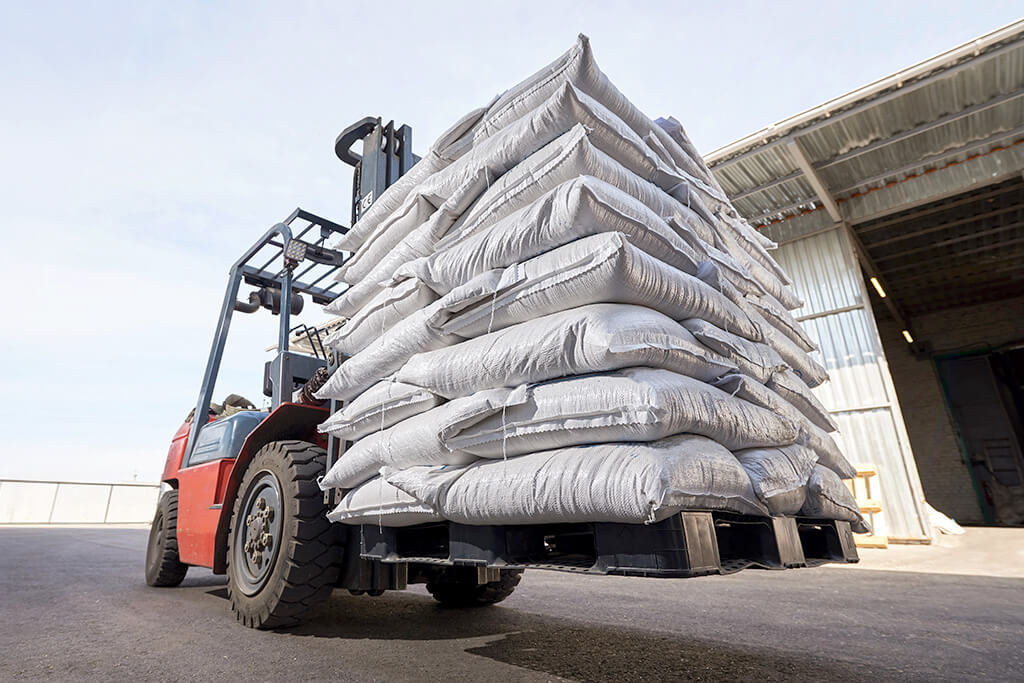
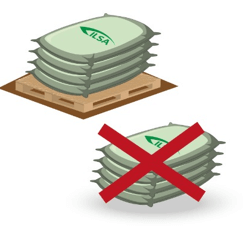
          It is recommended to store the bags on wooden platforms protected with Eucatex sheets or cardboard to prevent them from tearing. 
          Furthermore, a maximum of 25 bags should be stacked. Larger stacks may cause the fertilizers underneath to clump and/or become lumpy. 
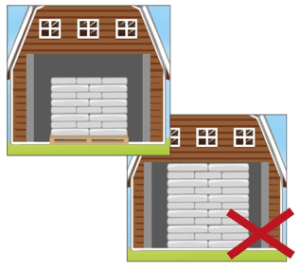
          Another important tip is to check expiration dates and use products that have been stored for the longest time first. Avoid damaging the bags so that the fertilizer does not become damp. 

          Fertilizers should be stored in places with temperatures between 5 and 30°C (some types of fertilizers are sensitive to high temperatures).  
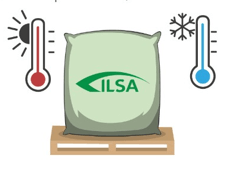
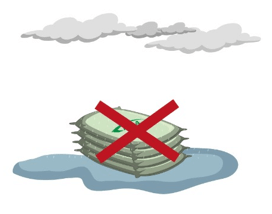
          Make sure there are no leaks to prevent rainwater from wetting the bags.
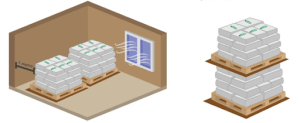
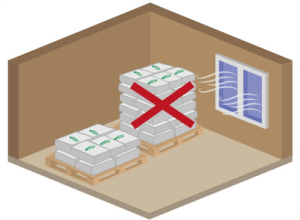
          Store the fertilizer in a suitable, covered and well-ventilated place to protect it from moisture and 1 meter away from walls, edges and beams. Maximum stacking: 1 pallet.There must be a Eucatex sheet between them to prevent damage to the pallet below and to facilitate stacking. 
  • How to store big bags?

          Big Bags packaging NO must be stored in uncovered locations (open air).
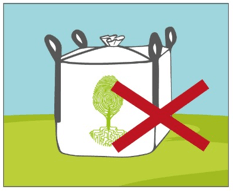
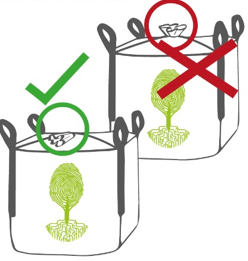
          You should also always fold the top of the packaging to prevent moisture from entering. 
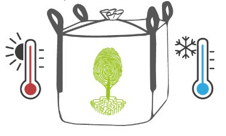
          Just like bags, fertilizers must be stored in places with temperatures between 5 and 30°C (some types of fertilizers are sensitive to high temperatures). 
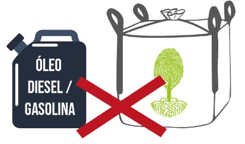
          IMPORTANT: Fertilizers should not be stored together with any flammable material.
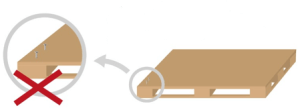
          Another simple but important factor is to ensure that there are no nails or similar items on the platform that could pierce the Big Bag. 
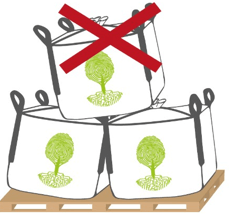
          Stack a maximum of two Big Bags.
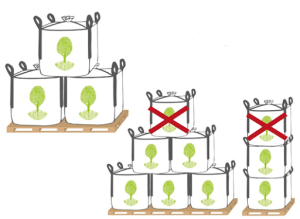
          The stack should not tilt, if this happens, straighten it immediately to avoid accidents. 
  • How to store liquid and water-soluble fertilizers?

          It is important that they are stored on platforms for better conservation.

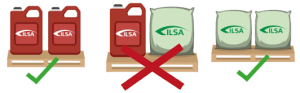
          Fertilizers NO must be stored together with any flammable material. 
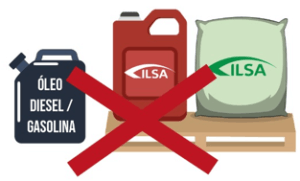
          Liquid and water-soluble fertilizers must be stored separately. 
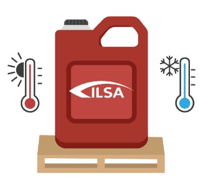
          Like other fertilizers, they must be stored in places with temperatures between 5 and 30°C (some types of fertilizers are sensitive to high and low temperatures).

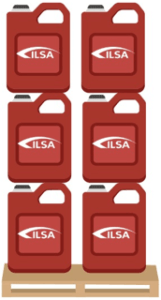
          Liquids: It is important to be careful when stacking products, stacking a maximum of 3 drums. 

          Water-soluble: Can be stored with up to 7 bags per stack, in a suitable, covered and well-ventilated place to protect it from humidity and 1 meter away from walls, edges and beams. 
          These were some tips on how different types of fertilizers should be stored, in order to avoid potential economic losses and maintain the safety of the property by preventing accidents.

References

EMBRAPA

https://www.embrapa.br/busca-de-publicacoes/-/publicacao/549450/consumo-e-producao-de-fertilizantes-no-brasil accessed 04/14/2024.

ILSA fertilizers

Authors

Agr Eng. Dr. Angélica Schmitz Heinzen

Agricultural Eng. Msc. Carolina Custodio Pinto

Agricultural Eng. Msc. Thiago Stella de Freitas

Facebook
LinkedIn

Newsletter

Receive news from Ilsa Brasil by email

Thanks!

Don't forget to confirm your registration via the email sent.

Highlights

Fertilization management for onion crops and ILSA solutions for increasing productivity

See also

Germinating seed roots in soil, clear sectional view, ample text space, clean setting

The importance of root development and protection of nitrogen-fixing bacteria in soybeans (products that do not harm the bacteria).

READ MORE
Caderno de Resultado de Campo ILSA Brasil 2018/2019

Get to know the ILSA Brazil 2018/2019 Field Results Notebook.

READ MORE
ILSA Brasil - Filial 01

ILSA Brasil opens new factory in Rio Grande do Sul

READ MORE
Instagram Facebook Linkedin Youtube

Headquarters

Faxinal Road, 2801
White Monkey Neighborhood
Gate/RS

see on map

Branch

Old Estancia Street, 1901
Old Gate Neighborhood
Gate/RS

see on map

Contact

  • (51) 3500 3043
  • [email protected]
  • Work with us
  • Whistleblower Channel
  • Intranet
  • Code of Ethics and Conduct
  • © 2026 ILSA BRASIL | All rights reserved.

Clean Energy Profile

Perfil Energia has been in the energy market for over 18 years, serving customers from various regions of Brazil. Through its SUSTAINABLE PROFILE program, it certifies organizations by accounting for greenhouse gas (GHG) emissions regulated by the Kyoto Protocol that will no longer be emitted by the customer who joins the free contracting environment (ACL).

ILSA BRASIL aims to transform the way we preserve and feed the planet, seeking to develop our products in a sustainable way, contributing to the healthy growth of the market in which we operate. In this way, we have joined the SUSTAINABLE PROFILE PROGRAM, which allows us to meet two sustainable development goals established by the UN:

7 – Clean and affordable energy
11 – Sustainable cities and communities
12 – Responsible consumption and production
13 – Action against global climate change

In 20223, with the purchase of energy in the Free Contracting Environment, originating from renewable sources, we stopped emitting:

56,317 t of CO², the equivalent of 2,559 trees planted