


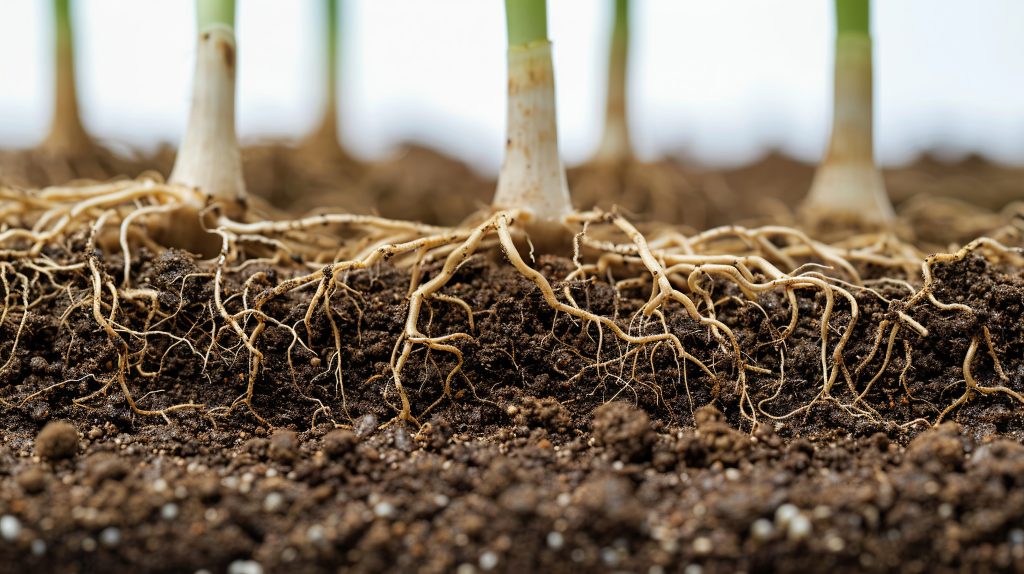
Roots are essential plant structures that emerged during the colonization of the terrestrial environment (OLIVEIRA, 2017; RAVEN and EICHHORN, 2014). They perform various functions, including anchoring and support, water and nutrient absorption, and the production of growth-regulating hormones (VALVERDE-BARRANTES et al., 2015). Furthermore, roots are responsible for a significant portion of the primary productivity of terrestrial ecosystems (MOMMER et al., 2015; MA and CHEN, 2016; FRESCHET et al., 2021), being important for supplying resources to the soil microbial community and thus influencing microbial decomposition processes and nutrient cycling (FRESCHET and ROUMET, 2017; WANG et al., 2019). Because they contribute to improving the physical and chemical aspects of the soil, roots are considered a good indicator of soil quality (GARLET and SCHUMACHER, 2020).
Root development is a complex process, controlled by characteristics inherent to the plant itself and the environment in which it is located (VALVERDE-BARRANTES et al., 2015). According to Abramoff and Finzi (2015), one of the main factors controlling the abundance and distribution of roots in the soil is the genotype of the species that make up the plant community; however, the physical and chemical properties of the soil, such as fertility, density, oxygen availability, pH, texture, and temperature, as well as climatic seasonality, also exert a strong influence (VALVERDE-BARRANTES et al., 2015).
Roots can be classified as fine and coarse (RIBEIRO et al., 2024). The permeable outer tissues with a low degree of suberization that make up fine roots play an essential role in the absorption of water and nutrients. On the other hand, coarse roots act in support, solute conduction, expansion of the system in general, and fixation of the plant in the soil; thus, they grow deeper (RATUCHNE et al., 2016). Authors such as Correa et al. (2019) indicate that the quality of the root system can be measured by considering the amplitude of the system's contact surface with the soil, since the deeper the root, the greater the volume of soil explored by the plant.
Relationships between root growth and physical soil conditions
The modifications caused by soil disturbance in the structure, pore size distribution, and organic carbon content alter the soil's water retention forces and availability, which are determining factors for plant development (SILVA et al., 2005). Soil and water conservation affects the sustainability of the production system, thus requiring various conservation practices to preserve the physical, chemical, and biological quality of these natural resources (MORAES, 2017).
Macropores are the main pores responsible for gas flows in the soil (MORAES, 2017). The minimum aeration porosity of a soil should vary depending on several factors, which determine drainage characteristics and the time the root system is exposed to restricted oxygenation (JONG VAN LIER, 2001).
Root growth and the soil-root interface
The increase in root extension occurs in the apical region of the roots, and this extension of the apical root axes, as well as the emission of lateral roots, occurs to expand the area for water and nutrient uptake, in addition to enhancing plant anchorage (GREGORY, 2006). Different regions of the root are found in the root apex (Figure 1), with cell divisions occurring in the apical meristem, which is confined near the root cap, a protective shield for the roots, and in the root elongation zone (KONRAD, 2006), the region where root pressures for soil penetration occur as a result of the biophysical processes of soil-root interaction (BENGOUGH, 2006).
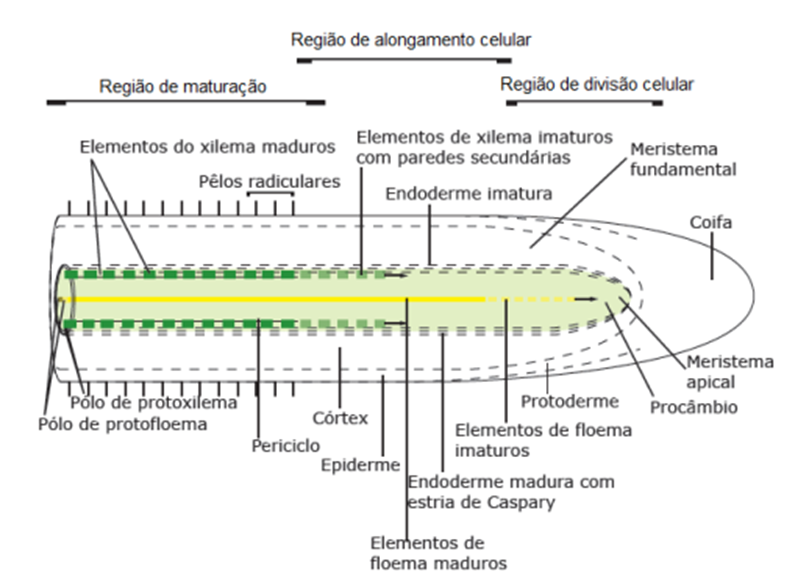
Figure 1. Schematic representation of the root apex with regions of cell division, elongation and maturation. Source: Konrad (2006).
Cell division does not result in an increase in root length, but rather provides the raw materials for subsequent cell expansion and, therefore, root growth is not solely a result of cell division (GREGORY, 2006). In the elongation zone, outside the meristem, cells increase in length, accompanied by a large increase in vacuole size and an increase in the area of the cell lateral walls (GREGORY, 2006).
The physical limitations of soils directly affect the root growth of crops by reducing the root elongation rate (BENGOUGH et al., 2011). Thus, if there are no chemical limitations in the soils, the physical conditions of the soils during the crop development cycle will be responsible for allowing the roots to elongate and grow in the soil (MORAES, 2017).
Intensive tillage promotes the dispersion of soil particles and causes surface sealing, leading to the clogging of soil pores (VALENTINE et al., 2012), altering air and water flows in the soil and from the soil to plant roots. Thus, the physical limits to plant growth are different in soils with or without tillage.
Influence of root productivity on the carbon cycle.
The global carbon (C) cycle is basically controlled by the balance between CO₂ emissions and absorption.2 by terrestrial ecosystems (PEREIRA JÚNIOR et al., 2016; MORANDI et al., 2021). Vegetation plays a fundamental role in regulating this cycle, since a significant portion of CO₂ is released through the photosynthetic process.2 It is absorbed and subsequently stored in plant biomass (AGUIAR, 2018). In this sense, it is known that, depending on the ecosystem, roots can be responsible for up to 50% of primary productivity (MA and CHEN, 2016; FRESCHET et al., 2021), surpassing the aerial part in biomass accumulation.
Soil organic matter can represent a large part of the total carbon in terrestrial ecosystems (NANZER et al., 2019). Thus, in addition to being efficient for carbon fixation, roots, especially fine roots (due to their high dynamic nature), directly impact the biogeochemical cycle of C (RATUCHNE et al., 2016).
It is worth noting that most biomass studies in terrestrial ecosystems have focused only on the aboveground component, while underground reservoirs, such as root biomass, are still largely neglected (Pereira Júnior et al., 2016). The failure to incorporate these underground stocks reduces the accuracy of estimates, preventing a better understanding of the real contribution of different terrestrial ecosystems to the global carbon balance (Ribeiro et al., 2024).
Influence of fine roots on nutrient cycling
Roots constitute an important source and sink of nutrients in terrestrial ecosystems (RIBEIRO et al., 2024). Their productivity is fundamental for nutrient foraging and water absorption, while also constituting a primary input of nutrients into the soil through its renewal (LOIOLA et al., 2015). According to King et al. (2021), the influence of roots on nutrient cycling can vary according to their diameter, with fine roots (≤2 mm) containing significantly higher concentrations of nutrients, such as nitrogen (N), phosphorus (P), and magnesium (Mg), and consequently a greater contribution compared to thicker roots.
Fine roots are responsible for a large portion of the primary productivity of terrestrial ecosystems, and in certain ecosystems, they can exceed aboveground productivity (RIBEIRO et al., 2024). Therefore, the concentrations of nutrients present in fine roots can be higher than those present in plant foliage and subsequently in the litter (VERMA et al., 2021). This, coupled with the fact that fine roots have a short lifespan and exhibit accelerated production, replacement, and decomposition dynamics, makes them an important pathway for the flow and cycling of C and nutrients in terrestrial ecosystems (VALVERDE-BARRANTES et al., 2015; FRESCHET and ROUMET, 2017; GARLET and SCHUMACHER, 2020).
It is important to emphasize that root development in the soil profile significantly influences the microbial community, mainly by providing organic resources from root exudation (LANGE et al., 2015). This is highly relevant because, depending on the vegetation, the availability of these resources in the soil can favor the establishment of symbiotic relationships between microorganisms and plants, enabling better contact and absorption of essential nutrients, consequently promoting an increase in plant biomass (FREIRE et al., 2020). Effectively, soil microorganisms supply the plant with inorganic nutrients such as N and P, and in return, receive organic nutrients from the plant (WANG et al., 2019).
Given these factors, it is evident that the use of products rich in carbon and amino acids can contribute to soil quality and consequently improve plant rooting, making nutrient absorption more efficient.
The Azogel matrix present in all Ilsa granules offers a range of options that meet the needs of various crops and different soil types and textures.
AZOGEL VS RHIZOSPHERE
The rhizosphere (Figure 2) can be defined as the region of soil under the influence of roots. Rhizosphere soil has very different characteristics from soil located far from the roots, because:
• There is a high presence of organic compounds;
• Numerous specific symbiotic processes occur;
• The location has a low ionic concentration and a low pH;
• Lower oxygen concentration.
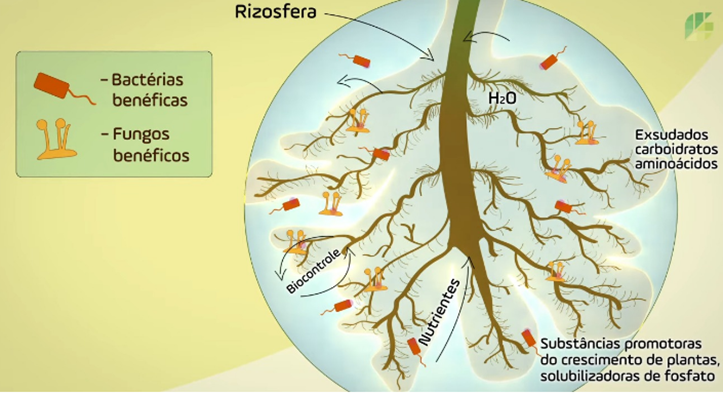
Figure 2. Shows the area of influence of the rhizosphere in the soil. Source: Looking at school supplies.
In general, the number of microorganisms present in the rhizosphere is much greater than in non-rhizospheric soil, and their existence depends mainly on the organic compounds that the roots exude into the soil. In turn, the quality of the rhizosphere depends on a high availability of organic carbon. Therefore, both nitrogen and other organic components are present in high concentrations in AZOGEL.
They contribute positively to proper microbial development in the rhizosphere. This is a very important factor because bacteria feed on organic carbon, and plants feed on the elements that bacteria and fungi provide.
As an alternative via seed treatment, ILSA relies on... This is an exclusive, high-tech fertilizer from ILSA BRASIL, based on GELAMIN®, which represents a natural source of rapidly absorbed AMINO ACIDS that have both nutritional and physiological stimulating effects on plants. Its modern production technology allows for a unique and highly homogeneous product (without variations in raw materials or guarantees).
Applying stimulants via seeds is an efficient agronomic strategy focused on providing a better start to plant development. These products act directly to stimulate germination and uniformity of emergence, resulting in more vigorous seedlings.
The main benefit is improved root system growth. Deeper, more branched roots allow plants to explore a larger volume of soil, optimizing the absorption of water and essential nutrients for their development. This advancement in the root system contributes to the formation of a more robust and healthy aerial part. Furthermore, deeper roots increase the plants' resilience in adverse conditions, such as periods of water deficit. This characteristic is especially important in regions subject to irregular rainfall, promoting greater stability.
In general, ILSA has a complete portfolio for the good root development of crops, whether by associating AZOGEL with its base formulations in the GRADUAL MIX line, or in liquid form associated with seed treatment.
References:
ABRAMOFF, Rose Z.; FINZI, Adrien C. Are above‐and below‐ground phenology in sync. New Phytologist, v. 205, n. 3, p. 1054-1061, 2015.
AGUIAR, Diego Ribeiro de. Dynamics and potential of carbon credits in the managed forest of the Tapajós National Forest, State of Pará. 2018.
BENGOUGH, AG Root responses to soil physical conditions; growth dynamics from field to cell. Journal of Experimental Botany, Oxford, vol. 57, no. 2, p. 437– 447, 2006.
BENGOUGH, AG et al. Root elongation, water stress, and mechanical impedance: A review of limiting stresses and beneficial root tip traits. Journal of Experimental Botany, Oxford, vol. 62, no. 1, p. 59–68, 2011.
CORREA, José et al. Soil compaction and the architectural plasticity of root systems. Journal of experimental botany, v. 70, no. 21, p. 6019-6034, 2019.
FREIRE, Gabriel Araújo Paes et al. Litter dynamics in a terra firme forest area, Western Amazon. Native, v. 8, no. 3, p. 323-328, 2020.
FRESCHET, Grégoire T.; ROUMET, Catherine. Sampling roots to capture plant and soil functions. Functional Ecology, v. 31, no. 8, p. 1506-1518, 2017.
FRESCHET, Gregoire T. et al. A starting guide to root ecology: strengthening ecological concepts and standardizing root classification, sampling, processing and trait measurements. New Phytologist, v. 232, n. 3, p. 973-1122, 2021.
GARLET, Claudinei; SCHUMACHER, Mauro Valdir. Biomass and length of fine roots in a forest restoration area. Brazilian Journal of Environmental Management and Sustainability, v. 7, no. 15, p. 351-361, 2020.
GREGORY, PJ Plant Roots Growth Activity and Interaction with Soils. Oxford, UK: Blackwell Publishing Ltd, 2006.
JONG VAN LIER, Q. DE. Root system oxygenation: a physical approach. Brazilian Journal of Soil Science, Viçosa, v. 25, n. 1, p. 233–238, 2001.
KING, William L. et al. The hierarchy of root branching order determines bacterial composition, microbial carrying capacity and microbial filtering. Communications biology, v. 4, n. 1, p. 483, 2021.
KONRAD, ML. Nutrient transport in plants. In: BIZERRIL, MXA (Coord.), (Ed.). Biological processes in the uptake and transformation of matter and energy: Module II. Brasília: University of Brasília, 2006. p. 357–383.
LANGE, Markus et al. Plant diversity increases soil microbial activity and soil carbon storage. Nature communications, v. 6, n. 1, p. 6707, 2015.
LOIOLA, Priscilla P.; SCHERER-LORENZEN, Michael; BATTLE, Marco Antônio. The role of environmental filters and functional traits in predicting the root biomass and productivity in savannas and tropical seasonal forests. Forest Ecology and Management, v. 342, p. 49-55, 2015.
MA, Zilong; CHEN, Han YH. Effects of species diversity on fine root productivity in diverse ecosystems: A global meta‐analysis. Global Ecology and Biogeography, v. 25, no. 11, p. 1387-1396, 2016.
MOMMER, Liesje et al. Diversity effects on root length production and loss in an experimental grassland community. Functional Ecology, v. 29, no. 12, p. 1560-1568, 2015.
MORAES, Moacir Tuzzin de. Modeling the root growth of corn and soybean subjected to water and mechanical stress in an Oxisol. Federal University of Rio Grande do Sul. Doctoral Thesis. 2017.
MORANDI, Paulo S. et al. Tree diversity and above-ground biomass in the South America Cerrado biome and their conservation implications. Biodiversity and Conservation, v. 29, p. 1519-1536, 2020.
NANZER, Marina Chiquito et al. Total organic carbon stock and particle size fractionation of organic matter in land use systems in the Cerrado. Journal of Agroveterinary Sciences, v. 18, no. 1, p. 136-145, 2019.
PEREIRA, Lécio Resende et al. Carbon stocks in a tropical dry forest in Brazil. Journal of Agricultural Science, v. 47, no. 1, p. 32-40, 2016.
OLIVEIRA, Paulo Marcelo Rayner. Control of the metabolism and development of the epiphytic orchid Catasetum fimbriatum in response to light incidence on the root system.. 2017. Doctoral Thesis. University of São Paulo.
RATUCHNE, Luis Carlos et al. State of the art in quantifying biomass in roots of forest formations. Forest and Environment, v. 23, no. 3, p. 450-462, 2016.
RAVEN, PH; EVERT, RF; EICHHORN, SE Raven Plant Biology. 8th Edition. Rio de Janeiro, 2014.
RIBEIRO, Jéssica Araújo Heringer et al. Ecosystemic importance of roots: A literature review. Research, Society and Development, v. 13, no. 3, p. e0313345177, 2024.
SILVA, MAS DA et al. Soil physical attributes related to water storage and tillage systems in a Loamy Acrisol. Ciência Rural, Santa Maria, v. 35, n. 3, p. 544–552, 2005.
VALVERDE‐BARRANTES, Oscar J. et al. Aggregated and complementary: symmetric proliferation, overyielding, and mass effects explain fine‐root biomass in soil patches in a diverse temperate deciduous forest landscape. New Phytologist, v. 205, no. 2, p. 731-742, 2015.
VERMA, Abhishek K. et al. Fine root production and nutrient dynamics in relation to stand characteristics of chir pine mixed banj oak forests in central Himalaya. Flora, v. 279, p. 151808, 2021.
WANG, Jun-Jian et al. Long-term nitrogen addition suppresses microbial degradation, enhances soil carbon storage, and alters the molecular composition of soil organic matter. Biogeochemistry, v. 142, p. 299-313, 2019.
Authors:
Agr Eng. Dr. Angélica Schmitz Heinzen
Agricultural Eng. Msc. Thiago Stella de Freitas
Agricultural Engineer Tuíra Barcellos