


Soybeans are an annual crop that is quite demanding in terms of nutrients. For nutrients to be efficiently utilized by the crop, they must be present in the soil in sufficient quantities and in balanced ratios (VENDRUSCOLO; RAIMUNDO; SCHONINGER, 2020). Low concentration or imbalance can result in unbalanced absorption (SFREDO, 2008).
Due to the low quantity required by plants, micronutrients end up taking a back seat in research related to fertilization. However, with the increase in crop productivity, the reserves of these nutrients in the soil have been depleted, making their application to the soil necessary to avoid affecting the productive potential (SFREDO, 2008).
Manganese (Mn) has low mobility in the phloem, and its deficiency initially appears in the newest leaves. At the metabolic level, Mn deficiency causes damage to chloroplasts, affecting the photolysis of water in photosystem II, which provides the electrons necessary for photosynthesis (FERNANDO; LYNCH, 2015).
Manganese is absorbed as Mn.+2 and transported through the xylem to the aerial parts (POTRICH; JARDINI, 2018). Accumulation occurs particularly in the peripheral cells of the leaf and petiole (MARENCO; LOPES, 2007). It acts as an activator of 35 different enzymes, controlling everything from the biosynthesis of aromatic amino acids to the formation of secondary products (HEENAN; CAMPBELL, 1980). Mn deficiency decreases cell elongation and may reduce root growth, indicating inhibition of lipid or gibberellic acid metabolism. Symptoms of deficiency in the plant are pronounced interveinal chlorosis and green bands between the secondary veins resembling a "fishbone" (VIEGÁS et al., 1992).
In natural systems, Mn is present in minerals in the form of Mn oxides, often mixed with iron oxides (Fe). Its availability in the soil is determined by several factors, including pH, redox potential, nature and concentration of cations and anions, soil mineralogical composition, soil organic matter content, and microorganisms (FAGERIA, 2009). In plants, Mn plays an important role in the constitution of enzymes, indirectly participates in chlorophyll formation, and acts in the activation of various metabolic reactions related to photosynthesis. The characteristic symptom of Mn deficiency is interveinal chlorosis of the leaves, with the veins remaining dark green (Figure 1) (HANSEL; OLIVEIRA, 2016).

Figure 1. Symptoms of manganese deficiency in soybeans.
Manganese (Mn) availability increases when soil pH decreases, and symptoms of Mn toxicity are commonly observed in soils with a pH below 5.5. Conversely, as the pH rises above 6.0, there is a progressive reduction in Mn availability in the soil, resulting in a deficiency of this nutrient in plants. Incorrect management of nutrients and soil amendments has been identified as the main trigger for Mn deficiency (HANSEL; OLIVEIRA, 2016).
The genetic material used by the farmer can also influence the crop's tolerance to Mn deficiency. Studies conducted under conditions of low Mn availability in the soil have shown different behaviors among various soybean cultivars. For the same concentration of Mn in the aerial part, the cultivars showed different behaviors regarding Mn deficiency symptoms and dry matter production (OLIVEIRA et al., 1997). On the other hand, cultivars considered sensitive, but which had a higher allocation of Mn in the leaf tissue, showed less sensitivity to the deficiency of this element (HANSEL; OLIVEIRA, 2016).
Crop productivity is a result of environmental factors (light, photoperiod, water, temperature), genetic factors (productive potential of the crop itself, adaptability), management factors (weeds, pests, diseases, and soil fertility), and biochemical and physiological factors (primary and secondary metabolism, antioxidant metabolism) (SOARES, 2016). To achieve high production levels, research is conducted to maximize productivity, even when edaphoclimatic conditions are unfavorable. In this way, through management practices, it is possible to improve the physiological, biochemical, and morphological characteristics of the crop (SANTOS et al., 2020).
In this context, a balance of macro and micronutrients is necessary, as they can act directly or indirectly in supplying energy for plant metabolism (HERNANDES, 2009). Micronutrients are required in smaller quantities, but are essential, as reported by Dechen and Nachtigall (2006), demonstrating that manganese is essential for plant growth and development. This nutrient acts as a cofactor for several enzymes linked to secondary metabolism (BURNELL, 1988). According to Graham (1983) and Malavolta (2006), low concentrations of some amino acids are found in tissues deficient in Mn.
Availability and absorption of manganese
The availability of Mn in soils is influenced by several factors, including soil pH (SÃO JOÃO, 2006). MASCAGNI JÚNIOR and COX (1985) found that at pH (water) above 6.2, Mn deficiency problems in soybeans increased. In Brazil, NOVAIS et al. (1989) detected deficiency symptoms when the soil pH (water) was above 6.5. Similarly, TANAKA et al. (1992), in a study on Mn deficiency in soybeans induced by excess lime, observed symptoms when the pH (CaCl₂) was above 6.5.2) was higher than 5.9.
Other factors that affect Mn availability are soil texture and organic matter content (SÃO JOÃO, 2006). ABREU et al. (1994) observed that in clayey soils, higher Mn contents are needed than in sandy soils to obtain the same concentration of the element in the plant, because Mn can be retained in functional groups on the surfaces of clays and organic compounds.
Manganese is absorbed by plants predominantly as Mn.+2, a form that exhibits chemical properties similar to those of alkaline ferrous metals, such as Ca+2 and Mg+2, and heavy metals, such as Fe and Zn, and these cations can inhibit their absorption and transport in plants (MALAVOLTA et al., 1997).
The concentration of Mn in plant tissues for growth typically ranges from 50 to 100 mg kg⁻¹.-1 in dry matter (PINTO, 2012). According to Tanaka et al. (1992), there is a positive correlation between the Mn content in soybean leaves and grain productivity.
Moreira et al. (2003), studying the influence of magnesium on manganese absorption, found that as the concentration of Mg in the soil increased, there was a decrease in the absorption of Mn by detached roots. This result is evidence of the interaction that occurs between the nutrients, with inhibition of Mn absorption due to the greater presence of Mg in the solution.
Available Mn in the soil depends mainly on the parent material and some factors such as pH, organic matter and soil texture (VALADARES; CAMARGO, 1983).
The effect of liming on Mn availability is mainly due to the increase in adsorption sites in the soil as a result of the existence of pH-dependent charges, as described by Alloway (1990), and, consequently, the density of negative charges present on the surface of the colloids.
Several studies have shown that the most soluble (exchangeable) fraction is the most important form of Mn available in the soil for plants or solubilized by extraction solutions (SHUMAN, 1986; SIMS, 1986).
Borges and Coutinho (2004), in a study of metal fractionation after the application of biosolids to two soils, found that most of the metals were in the fractions with more stable bonds (bound to oxides and residual).
Nascimento et al. (2002), studying the influence of liming and manganese doses on the desorption, chemical extraction, and fractionation of this element in Oxisol samples, found relatively high levels in fractions considered available, with 13 % in exchangeable form and 11 % in forms bound to organic matter, indicating the low affinity of Mn for the more specific adsorption sites in the soil (HARTER, 1991; McBRIDE, 1994). This can be explained by the fact that, regardless of the soil reaction, the exchangeable fraction and organic matter are predominant in the retention of the element (PINTO, 2012).
Nachtigall et al. (2009) concluded that Mn levels, only in the exchangeable fraction, were affected by variations in soil OM levels, and increased linearly with increasing doses of added chicken litter. The highest proportion of Mn was associated with the organic fraction (35%) and the residual fraction (30%), mainly at higher pH values.
Mann et al. (2001), researching the effect of manganese fertilization via soil and foliar application, found that the application of manganese in its different forms (time and place, soil/leaf) provided significant increases in soybean grain production and in foliar levels of the element in pots.
Mann et al. (2001) concluded that foliar applications of Mn at 450 and 600 g ha⁻¹ were effective.-1, The three application times (V4, V8, and V10, respectively with four, eight, and ten trifoliate leaves with unfolded leaflets) were responsible for the highest yields obtained, and were considered more efficient than soil applications.
Manganese deficiency and glyphosate, what is the relationship?
With the introduction of Roundup Ready® (RR) soybeans and the increased use of the herbicide glyphosate, questions arose regarding the problem of glyphosate-induced Mn deficiency in soybeans (Figure 2). The chelating characteristic of glyphosate can promote the immobilization of nutrients, such as Fe and Mn, in transgenic soybeans resistant to this herbicide, inducing Mn deficiency in the crop (HANSEL; OLIVEIRA, 2016).
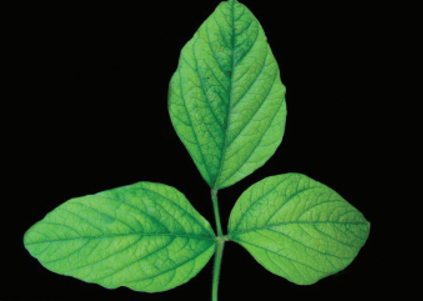
Figure 2. Manganese deficiency induced by glyphosate application in RR soybeans.
Some authors have reported that the glyphosate-resistant gene added to soybeans may have altered some physiological process in the plant, delaying the absorption and translocation of manganese, thus requiring supplemental manganese fertilization to eliminate possible deficiency and compromised productivity (GORDON, 2007). Others, however, report that the simple use of glyphosate (regardless of soybean transgenesis) interferes with the mineral nutrition of the crop, affecting the absorption and/or redistribution of Mn and other nutrients (OZTURK et al., 2008; ZOBIOLE et al., 2010).
Some studies show that RR soybeans, when managed with glyphosate, do not suffer from manganese absorption (ANDRADE; ROSOLEM, 2011), even though under field conditions, a certain yellowing of glyphosate-tolerant soybeans is visually noticeable after the application of this herbicide, and many producers and technicians have associated this visual symptom with a possible manganese deficiency (BASSO et al., 2011), even if the levels of this nutrient in the soil are adequate.
Furthermore, glyphosate has the ability to inhibit enzymes that prevent the synthesis of important amino acids, such as phenylalanine, tryptophan, and tyrosine (JAWORSKI, 1972; ZABLOTOWICH; REDDY, 2004). Glyphosate can inhibit manganese absorption, resulting in low photosynthetic activity and low enzymatic activation, leading to yellowing of the leaves, since this nutrient is essential for chlorophyll (MALAVOLTA, 2006). Therefore, it is recommended to apply manganese before or after glyphosate application, acting as a mitigator of these problems (PEROZINI, 2016).
Timing of manganese application
In general, foliar application of Mn in soybeans has been the most widely used method for supplying this nutrient. Carvalho et al. (2015) reported increases in the productivity of the Celeste and Batiza RR cultivars in response to foliar fertilization, under soil conditions with Mn levels below the critical level. The recommendation for the timing of Mn application varies among authors; under the conditions studied by Carvalho et al. (2015), maximum yields were obtained with the application of 150 g ha⁻¹.-1 Regarding Mn, a greater response in grain production was observed when it was carried out at stage R1, compared to stage R3. As for the physiological quality of the seeds, Carvalho et al. (2014) observed that foliar application of Mn provided increases in this parameter in seeds subjected to germination, accelerated aging, seedling emergence, electrical conductivity and tetrazolium (viability, vigor and mechanical damage) tests.
In an experiment conducted by Potrich and Jardini (2018), the application of supplemental Mn via foliar spray did not increase the morphological characteristics of transgenic soybeans. However, it did have significant effects on the thousand-grain weight and productivity of transgenic soybeans, regardless of the phenological stage at which it was applied. It is recommended to apply supplemental Mn via foliar spray at the V4 or V5 stage, even though it is significant at all stages evaluated, due to the maximization of mechanization when applying it along with other chemical products (POTRICH; JARDINI, 2018).
Micronutrients play an important role in the current scenario of soybean production in Brazil. It is worth highlighting that each of them, individually or in combination, acts in vital biochemical processes in the plant, which directly or indirectly affect grain productivity. Therefore, their adequate availability to plants is fundamental. To this end, it is important to observe certain soil characteristics that can influence their availability, such as pH range, organic matter content, and texture. Furthermore, in the absence of micronutrients in the soil, they must be supplied to the plants, either through direct application to the soil, seed treatment, or foliar application (HANSEL; OLIVEIRA, 2016).
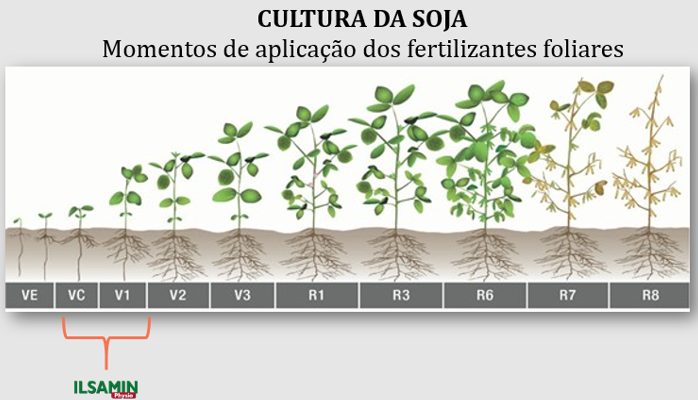
ILSA offers ILSAMIN Physio for foliar application, which contains a source of amino acids and manganese that help overcome stress caused by herbicide application. In addition, it enhances photosynthetic activity (faster recovery from damage). The recommended dosage is 1 to 2 L/ha at the VC to V1 growth stages.
Maintaining adequate manganese levels is essential to ensure that soybeans reach their productive potential. Deficiencies can lead to a significant reduction in pod formation and grain filling, directly impacting final yield.
The use of foliar fertilization with amino acid-based products is effective in the metabolic aspects of soybean cultivation, through its influence on nitrate reductase (NR) and glutamine synthetase (GS) activity, as well as increasing the concentration of total soluble proteins (TSP) in leaf tissue.
The combination of amino acids and manganese, components of ILSAMIN Physio, can play an important role in overcoming the stress caused by herbicide application in plants. During stress, amino acids help in cell regeneration and plant strengthening. Some amino acids, such as proline (an amino acid present in the organic matrix GELAMIM), help fight free radicals formed due to oxidative stress caused by herbicides. They also aid in osmoprotection and the regulation of crucial metabolic functions.
References
ABREU, CA; NOVAIS, RF; RAIJ, B. van; RIBEIRO, AC Comparison of methods for evaluating manganese availability in soils. Brazilian Journal of Soil Science, v.18, p.81-90, 1994.
ALLOWAY, BJ The origins of heavy metals in soils. In: ALLOWAY, BJ (Ed.). Heavy metals in soils. New York: John Wiley and Sons, p.29-39. 1990.
ANDRADE, GJM; ROSOLEM, CA. Manganese absorption in RR soybean under the effect of glyphosate. Brazilian Journal of Soil Science, v.35, p.961-968, 2011. https://doi.org/10.1590/S0100-06832011000300030
BASSO, Claudir José et al. Foliar application of manganese in glyphosate-tolerant transgenic soybean. Rural Science, v. 41, p. 1726-1731, 2011.
BORGES, MR; COUTINHO, ELM. Heavy metals in soil after biosolids application. I- Fractionation. Brazilian Journal of Soil Science, v.28, p.543-555, 2004.
BURNELL, JN The biochemistry of manganese in plants. In:GRAHAM, RD; HANNAM, RJ; UREN, NC Manganesein soils and plants. Dordrecht: Kluwer Academic Publishers, p. 125-137, 1988.
CARVALHO, ER; OLIVEIRA, JA; CALDEIRA, CM Physiological quality of conventional and transgenic RR soybean seeds produced under foliar application of manganese. Bragantia, v. 73, n. 3, p. 219-228, 2014.
CARVALHO, Everson Reis et al. Doses and application times of manganese via foliar application in conventional soybean cultivation and in transgenic RR derivatives. Biosci. j.(Online), pp. 352-361, 2015.
DECHEN, AR; NACHTIGALL, GR Essential and beneficial elements for higher plants. In: FERNANDES, MS Mineral nutrition of plants. Viçosa, MG: Brazilian Society of Soil Science, p. 432, 2006.
FAGERIA, NK The use of nutrients in crop plants. Boca Raton: CRC Press, 419 p. 2009.
FERNANDO, DR; LYNCH, JP Manganese phytotoxicity: new light on an old problem. Annals of Botany, v.116, p.313-319, 2015. https://doi.org/10.1093/aob/mcv111
GORDON, B. Manganese nutrition of glyphosate-resistant and conventional soybean. Better Crops, v.4, p.12-13, 2007.
GRAHAM, RD Effect of nutrient stress on susceptibility of plants to disease with particular reference to the trace elements. Advances in Botanical Research, London, vol. 10, p. 221-276, 1983.
HANSEL, Fernando Dubou; OLIVEIRA, Maurício L. Importance of micronutrients in soybean cultivation in Brazil. Agronomic Information, v. 153, p. 1-14, 2016.
HARTER, RD Micronutrient adsorption-desorption reactions in soils. In: MORTVERDT, JJ; COX, FR; SHUMAN, L.M.; WELCH, RM, eds. Micronutrients in agriculture, Madison, Soil Science Society of America, 1991. p.59-88.
HEENAN, DP; CAMPBELL, LC Soybean nitrate reductase activity influenced by manganese nutrition. Plant Cell Physiolgy, v.21, p.731-736, 1980.
JAWORSKI, EG Mode of action of N-phosphonomethylglycine: inhibition of aromatic amino acid biosynthesis. Journal of Agricultural Food Chemistry, Washington, v. 20, p. 1195-1198, 1972.
MASCAGNI JUNIOR, HJ; COX, FR Effective rates of fertilization for correcting manganese deficiency in soybeans. Agronomy Journal, v.77, p.363-366, 1985.
MALAVOLTA, E.; VITTI, GC; OLIVEIRA, SA. Evaluation of the nutritional stage of plants. Principles and applications. 2nd edition. Piracicaba: Potafos, p. 319, 1997.
MALAVOLTA, E. Manual of plant mineral nutrition. São Paulo: Editora Agronômica Ceres, 2006.
MANN, EN; REZENDE, PM; CARVALHO, JG; CORRÊA, JBD. Effect of manganese fertilization, via soil and foliar application at different times on soybean crop [Glycine max (L.) Merril]. Ciencia e Agrotecnologia, v. 25, n. 2, p. 264-273, 2001.
MARENCO, RA; LOPES, NF. Plant physiology: photosynthesis, respiration, water relations and mineral nutrition. 2nd ed. Viçosa, MG: Federal University of Viçosa, p. 469, 2007.
McBRIDE, MB Environmental chemistry of soils. New York, Oxford University Press, 1994. 406p.
MOREIRA, A.; MALAVOLTA, E.; HEINRICHS, R.; TANAKA, RT. Influence of magnesium on the absorption of manganese and zinc by detached soybean roots. Pesquisa Agropecuária Brasileira, Brasília, v. 38, n. 1, p. 95-101, jan. 2003.
NASCIMENTO, CWA; FONTES, RLF; NEVES, JCL Desorption, extraction and fractionation of manganese in Oxisols. Brazilian Journal of Soil Science, v. 26, p. 589-597, 2002.
NACHTIGALL GR; NOGUEIROL, RC; ALLEONI LRF Sequential extraction of Mn and Zn in soils as a function of pH and addition of chicken litter. Brazilian Journal of Agricultural and Environmental Engineering, v.13, n.3, p.240–249, 2009.
NOVAIS, RF; NEVES, JCL; BARROS, NF; SEDIYAMA, T. Manganese deficiency in soybean plants grown in Cerrado soils. Revista Brasileira de Ciência do Solo, v.13, p.199-204, 1989.
OLIVEIRA, Mauro Wagner de et al. GROWTH OF SOYBEAN CULTIVARS UNDER CONDITIONS OF LOW MANGANESE AVAILABILITY IN THE SOIL. II. MANGANESE CONCENTRATION AND ALLOCATION. Ceres, v. 44, n. 251, 1997.
OZTURK, Levent et al. Glyphosate inhibition of ferric reductase activity in iron deficient sunflower roots. New Phytologist, v. 177, no. 4, p. 899-906, 2008.
PEROZINI, AC. Glyphosate and manganese in transgenic soybean cultivation: plant physiology and nutrition, agronomic characteristics and economic analysis. UNESP-Ilha Solteira, p. 69, 2016.
PINTO, Anderson Santos. Manganese fertilization in soybeans: effects on soil and plant. Master's thesis. Faculty of Agricultural and Veterinary Sciences – Unesp, Jaboticabal Campus, 2012.
POTRICH, Murilo Vilela; JARDINI, Debora Curado. SUPPLEMENTARY APPLICATION OF MANGANESE IN TRANSGENIC SOYBEAN. Agronomy Final Project, 2018.
SOARES, LH. Physiological and phonometric alterations in soybean cultivation due to the use of lactofen, kinetin, salicylic acid and boron. Thesis (Doctorate in Phytotechnics) – Luiz de Queiroz School of Agriculture, University of São Paulo, Piracicaba, 2016.
SANTOS, Henrique Carneiro et al. Effect of manganese as a stress attenuator after glyphosate application in soybean cultivation. COMEIA Magazine, v. 2, p. 20-35, 2020.
SÃO JOÃO, Andréia de Cássia Gomes. Agronomic efficiency of manganese sources, availability to soybeans and distribution in soil fractions. Master's thesis. Faculty of Agricultural and Veterinary Sciences – Unesp, Jaboticabal Campus, 2006.
SFREDO, GJ. Soybeans in Brazil: liming, fertilization and mineral nutrition. Document 305. Embrapa Soja, Londrina, 148p. 2008.
SHUMAN, LM Effect of liming on the distribution of manganese, copper, iron and zinc among soil fractions. Soil Science Society of America Journal, v.50, p.1236- 1240, 1986.
TANAKA, RT; MASCARENHAS, HAA; BULISANI, EA. Manganese deficiency in soybeans induced by excess lime. Pesquisa Agropecuária Brasileira, v.27, p.247-20, 1992.
VALADARES, JMAS; CAMARGO, OA. Manganese in soils of the State of São Paulo. Brazilian Journal of Soil Science, v. 7, p. 123-130, 1983.
VENDRUSCOLO, Brunno Ellias; RAIMUNDO, Crislaine Borges; SCHONINGER, Evandro Luiz. Application methods and sources of manganese in soybeans in Cerrado soil. Journal of Agro-Environmental Sciences, v. 18, no. 2, p. 82-87, 2020.
ZABLOTOWICZ, RM; REDDY, KN Impact of glyphosate and Bradyrhizobiumjaponicumsymbiosis with glyphosate-resistant transgenic soybean: a minireview. Journal of Environmental Quality, vol. 33, p. 825-831, 2004.
ZOBIOLE, Luiz et al. Glyphosate reduces shoot concentrations of mineral nutrients in glyphosate-resistant soybeans. Plant and Soil, v. 328, no. 1, p. 57-69, 2010.
Authors:
Agr Eng. Dr. Angélica Schmitz Heinzen
Agricultural Eng. Msc. Thiago Stella de Freitas
Agricultural Engineer Tuíra Barcellos