



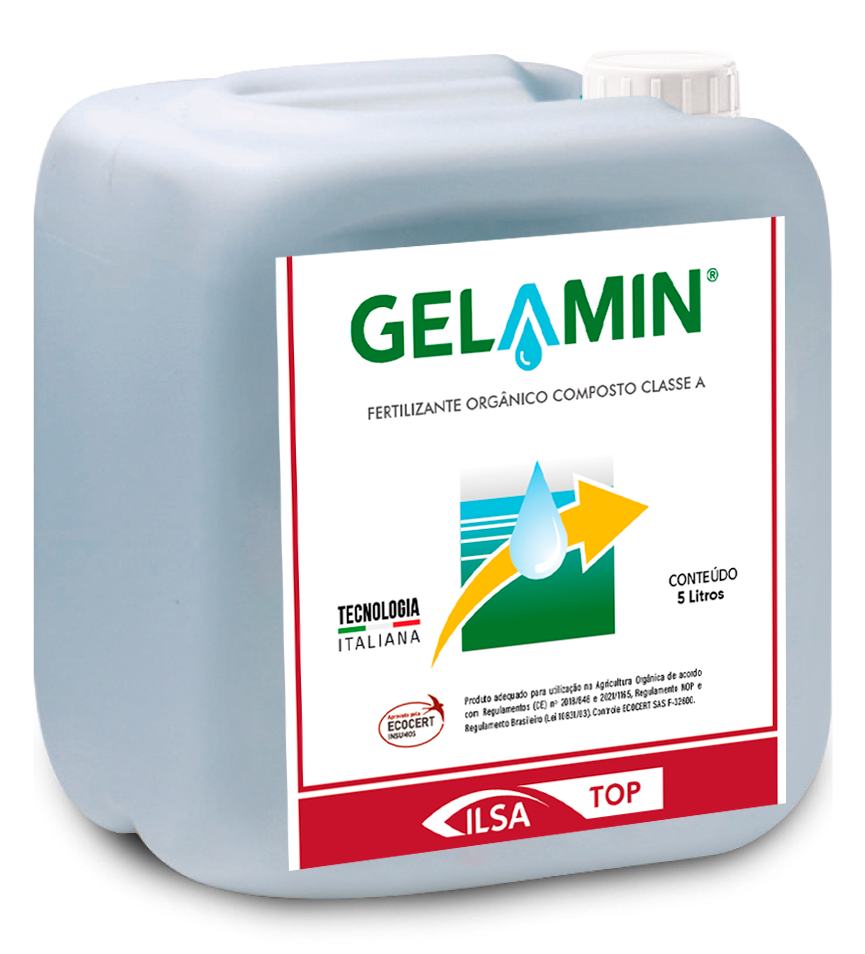
GELAMIN ® is derived from an enzymatic hydrolysis production process called FCEH ® (Fully Controlled Enzymatic Hydrolysis) by ILSA.
With a fluid matrix, it is a standardized, stable and homogeneous product, characterized by the predominance of amino acids in the levorotatory form readily absorbable by the plant.
Product suitable for use in organic agriculture, in accordance with Regulations (EU) No. 2018/848 and 2021/1165, NOP Regulation and BR Regulation – Law 10.831/2003). Controlled by ECOCERT SAS.

GELAMIN ® It is produced through controlled and highly specific enzymatic hydrolysis which makes it:
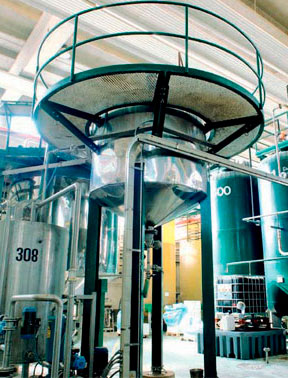
Features from GELAMIN ® :
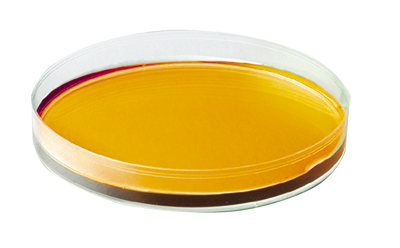
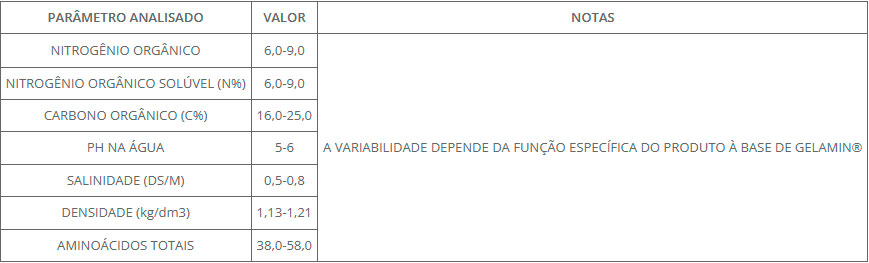
Depending on the product based on GELAMIN ® , the amino acid profile does not change, but the percentage of individual amino acids changes based on the specific function of the product.
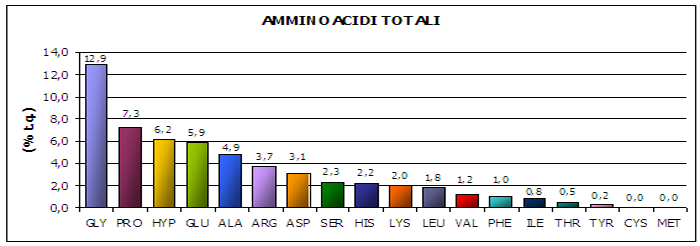
GELAMIN AMINO ACIDS ® (GLY=GLYCINE; PRO=PROLINE; HYP=HYDROXYPROLINE; GLU=GLUTAMIC ACID; ALA=ALANINE; ARG=ARGININE; ASP=ASPARTIC ACID; SER=SERINE; HIS=HISTIDINE; LYS=LYSINE; LEU=LEUCINE; VAL=VALINE; PHE=PHENYLALANINE; ILE=SOLEUCINE; THR=THREONINE; TYR=TYROSINE; CYS=CYSTEINE; MET=METHIONINE).
During the enzymatic hydrolysis process, protein fractions of variable length are formed (polypeptides, peptides and free amino acids): the molecular size of the peptides can be variable, depending on the intensity of hydrolysis, and ranging from a few hundred to several thousand daltons (Da).
The presence of these fractions with different molecular weights guarantees both the nutritional and biostimulant action of the matrix. GELAMIN ® .
In particular, the biostimulant properties of protein hydrolysates are derived primarily from free amino acids : the amino acid content is therefore an important parameter for the agronomic evaluation of protein hydrolysates.
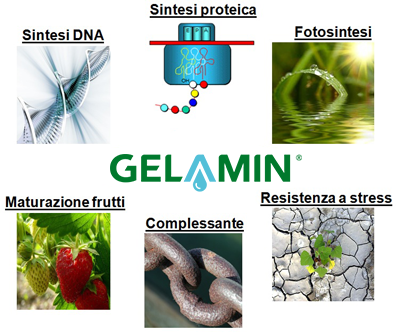
In fact, according to several authors, amino acids, especially in free form, would affect the physiological activities of the plant and in particular :
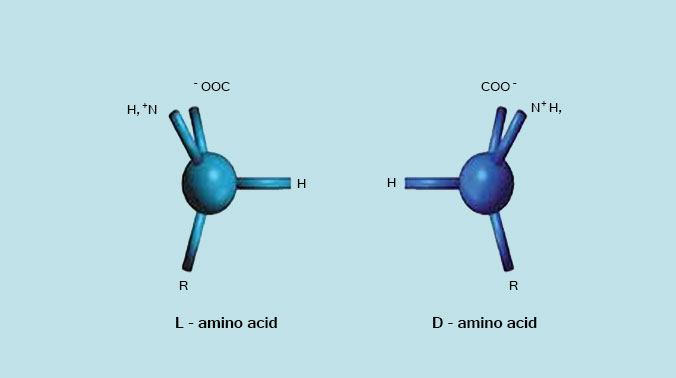
Amino acids in gelatin GELAMIN ® are mainly in the L (levorotatory) form, which is biologically active and recognized by plants.
► Levorotatory amino acids maintain their biological activity, since the use of specific enzymes and low temperatures during the enzymatic hydrolysis process allows to reduce the phenomena of racemization of free amino acids, which are typical of chemical or high temperature hydrolysis.
Racemization is a natural phenomenon that leads to the formation of dextrorotatory (in the D form) and levorotatory (in the L form) amino acids from a mixture containing only levorotatory amino acids.
► Racemization occurs very slowly at room temperature, while it is considerably accelerated at high temperatures: this is one of the reasons why dextrorotatory amino acids are virtually absent in nature, and it has been proven that they can also have negative or even toxic effects on living organisms.
Hydrolysis causes a substance to separate due to the effect of water, and can be
► Chemist : with the help of a chemical substance and therefore with an acidic or basic pH and, in general, at a high temperature.
► Enzymatic : with low temperature (40-50 °C) and pH close to neutral.
► Mixed: chemical + enzymatic.
During the enzymatic hydrolysis process, protein fractions of variable length (polypeptides, peptides and free amino acids) are formed.
Depending on the process adopted, very different protein hydrolysates can be obtained with different agronomic properties.
The main parameters by which the quality of a fluid protein hydrolysate is measured are:
► % total amino acids;
► molecular weight of the various components;
► degree of racemization %: dextrorotatory amino acids / total amino acids.
Amino acids can have two types of structure, levorotatory or dextrorotatory. The L form (levorotatory) is biologically active and recognized by plants.
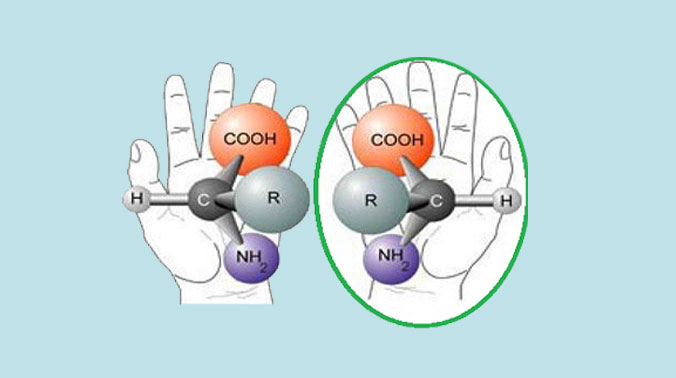
Compared to chemical hydrolysis, enzymatic hydrolysis allows a high content of levorotatory amino acids (L-form) to be obtained. These amino acids play a relevant role in the plant, they have a biostimulant effect because they act directly on the physiology of the plant. Therefore, protein hydrolysates produced by the enzymatic hydrolysis process are characterized by high quality.
Depending on the method of application, fluid protein hydrolysates obtained by the enzymatic hydrolysis process play diverse roles in plant physiology.
Applying L. amino acids and peptides by foliar application, they are easily absorbed by the leaf apparatus and are therefore directly used by the plant cell in various biochemical processes. In addition, L. amino acids and peptides have a biostimulant action on the plant cell, i.e. they help the plant to overcome abiotic stress (increased temperature, late spring frost, high salinity and drought, etc.) and stimulate the biosynthesis of proteins and DNA.
In addition, L. amino acids stimulate photosynthesis, as well as cell multiplication and expansion, improving vegetative development, fruit swelling and vegetative restart, etc.
Well, using protein hydrolysates by foliar application allows rapid absorption and translocation of amino acids, peptides and polypeptides into the plant. These compounds are organic molecules consisting of organic nitrogen that are rapidly bioavailable to plants.
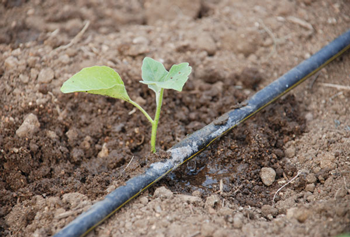
Applying amino acids and L. peptides by fertigation , protein hydrolysates increase the organic fertility of the soil because they act as an organic substrate for the multiplication of soil microflora.
This improves the physical and chemical conditions of the soil, making nutrients bioavailable to plants. Another benefit is the high percentage of organic nitrogen, which provides high nutritional value to plants.
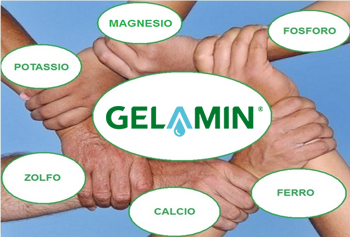
Furthermore, fluid-protein hydrolysates obtained by enzymatic hydrolysis have the capacity for “complexification” , which allows the absorption and translocation of those elements normally unavailable to plants (Fe, B, Ca, Mg).
The ability to “complex” is due to amino acids in the L-form. Therefore, the higher the content of active amino acids (in the L-form), the greater the ability to provide the plant with microelements.
Ultimately, the fluid-protein hydrolysates obtained by enzymatic hydrolysis have a “coformulating” action. This capacity allows them to be mixed with other products available on the market (fertilizers, commodities, PPPs, PGRs, etc.) improving their effectiveness and absorption by the plant.
Production process of fluid gelatin for agricultural use.
GELAMIN fluid gelatin ® for agricultural use is produced by means of FULLY CONTROLLED ENZYMATIC HYDROLYSIS FCEH ® .
The process is defined as “mild” because the reaction occurs at low temperatures (around 50-55°C) inside static reactors. The polypeptide chains that form collagen are attacked by a set of specific enzymes, which “cut” peptide bonds in a targeted and replicable manner. Once the hydrolysis stage is complete, vacuum concentration begins…
FCEH ® FULLY CONTROLLED ENZYMATIC HYDROLYSIS is an exclusive Ilsa process.
GELAMIN ® is used as a matrix for the formulation of ILSA products used as foliar fertilizers.
Foliar products based on GELAMIN ® are assimilated and translocated within the plant very quickly and, due to the presence of levorotatory amino acids, are readily used in the plant's primary metabolism processes, thus ensuring its uniform and balanced development.

Foliar fertilization with products based on GELAMIN ® It also has application benefits, as it ensures rapid absorption, allowing timely action in the event of nutritional deficiencies or critical periods for the plant.
GELAMIN ® is the basis for the formulation of a series of products with nutritional function, applied at the foliar level and containing complexed macro, meso and microelements .

GELAMIN ® in fact, due to its high organic matter content and the presence of free amino acids, peptides and polypeptides, it can form natural complexes or chelates with nutrients, thus increasing its availability for plants and microorganisms.
The action of the organic component and different protein fractions in fluid gelatin GELAMIN ® is then diversified: on the one hand, the complexation and chelation properties help to keep the elements active and usable by plants, even in a wide pH range; in fact, the high presence of amino acids, oligo- and polypeptides whose binding domains are involved in metal-complexation processes, promotes solubility in pH conditions under which, as a rule, the various elements would naturally tend to precipitate .
On the other hand, amino acids and peptides act both as carriers of the elements, facilitating their absorption, and as complexing agents that, by maintaining the elements
in a biologically active form, they favor their translocation and mobility through the phloem transport system. This is the system that carries the substances absorbed by the leaf apparatus to the other organs of the plant (flowers, fruits, seeds, storage organs, roots and young leaves).
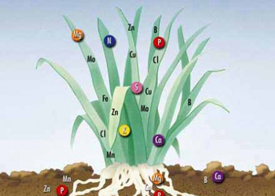
In particular, the levorotatory amino acids within the complex GELAMIN ® boron and make it available to fulfill its physiological roles of synthesizing cell wall pectins and transporting complex sugar-borate systems from photosynthetic organs to fruits. As for calcium, an essential component of cell walls, when chelated by amino acids and peptides, it has greater mobility and availability.
Furthermore, the presence of levorotatory amino acids and peptides increases the absorption and translocation of potassium and magnesium in all organs of the plant: the synergy between amino acids, magnesium and potassium allows to improve their activity within the plant.
Microelements such as zinc and manganese , which are important enzyme cofactors, because the amino acids are complexed and more easily transported within the plant, thus allowing rapid and efficient assimilation.
The complexing properties of the matrix GELAMIN ® give products that contain it the property of keeping iron available to the plant and in the biologically active form, that is, the bivalent (Fe 2+ ): it is demonstrated that GELAMIN ® It is designed to maintain iron in solution over a wide pH range in a form that is assimilable by the plant.
So you can conclude that GELAMIN based products ® contain complete elements that provide all the physiological advantages with regard to:

Support for plant physiology translates into quantitative and qualitative increases in production in terms of:
GELAMIN ® It is used as a matrix for the formulation of ILSA products used in fertigation for nutritional purposes.
Its use in fertigation is possible due to its peculiar characteristics, such as:

Products based on GELAMIN ® used in fertigation provide organic nitrogen that is rapidly decomposed by soil bacteria and converted into forms that can be assimilated by the roots (polypeptides, peptides and amino acids), which allows for a rapid response by plants and more homogeneous and balanced vegetative growth.
It was demonstrated, through measuring the increase in soil microbial respiration as a result of its application, that GELAMIN ® stimulates the
population of soil microorganisms.
Furthermore, these products have also been shown to have a direct stimulating effect on root development, which leads to greater root volume and a greater ability to explore the rhizosphere, thus facilitating nutrient uptake.
Agronomic tests confirm that GELAMIN-based products ® guarantee:
GELAMIN ® It is also the matrix for ILSA products with specific action that can be used in synergy with other fertilizers or products with phytosanitary action (insecticides, fungicides, herbicides, etc.).
Its use in products with a co-formulating function is possible due to its perfect miscibility and solubility.
The characteristics of GELAMIN ® increase the efficiency of use of synergistically distributed products, as GELAMIN ® :
Its activity as a coformulant is possible due to the presence of amino acids, peptides and polypeptides that can act as carriers, that is, transporters of other molecules across the leaf surface.
The positive influence of GELAMIN ® in the transport of pesticides is visible especially in the absorption, translocation and toxicity of the active ingredient, since the effectiveness of the latter is increased: protein hydrolysates in fact contain amino acids and peptides that are able to actively overcome cell membranes and act in
different metabolic pathways. Therefore, the penetration and translocation of other molecules are facilitated, both directly through active transport mechanisms (symport) and indirectly by increasing the free energy available to the cell for active transport mechanisms.
The positive influence of the matrix on fertilizer use efficiency is due to its ability to increase the retention of aqueous solutions containing fertilizers on the leaf edges. In addition, the product, as a result of increased retention, also increases the surface area between the droplets and the leaf blade, thereby increasing the absorption of the applied nutrient solution.
From an agronomic point of view, the application of products containing GELAMIN ® has several positive effects on the plant's physiology, such as:
GELAMIN ® is used as a matrix to formulate products ILSA used as foliar fertilizers. It has been shown that its characteristics allow it to be used both as a nutritional and as a stimulant: the stimulating activity depends mainly on some amino acids which, through the process of enzymatic hydrolysis at low temperatures, remain intact.
In the composition of the GELAMIN ® , in fact, in addition to amino acids involved in primary metabolisms (protein synthesis, photosynthesis…), there are also amino acids with a biological function in secondary metabolisms that affect resistance to abiotic stress on the one hand, while improving production quality on the other.
A clear plant stimulation activity was widely demonstrated, both in the leaf and root apparatus, with an increase in leaf and root masses without any real increase in nitrogen nutritional levels.
Perfil Energia has been in the energy market for over 18 years, serving customers from various regions of Brazil. Through its SUSTAINABLE PROFILE program, it certifies organizations by accounting for greenhouse gas (GHG) emissions regulated by the Kyoto Protocol that will no longer be emitted by the customer who joins the free contracting environment (ACL).
ILSA BRASIL aims to transform the way we preserve and feed the planet, seeking to develop our products in a sustainable way, contributing to the healthy growth of the market in which we operate. In this way, we have joined the SUSTAINABLE PROFILE PROGRAM, which allows us to meet two sustainable development goals established by the UN:
7 – Clean and affordable energy
11 – Sustainable cities and communities
12 – Responsible consumption and production
13 – Action against global climate change
In 20223, with the purchase of energy in the Free Contracting Environment, originating from renewable sources, we stopped emitting:
56,317 t of CO², the equivalent of 2,559 trees planted